Three months ago, Justin embarked on a pivotal journey as the new Head of Engineering at a startup, following the departure of the previous CTO. Commanding a team of eight, encompassing software developers and testers, Justin’s experience as a former team leader had primed him for this role. Yet, the path to leadership is often riddled with unexpected twists.
Justin rushed into “hands-on” leadership in a very independent and autonomous leadership group. He might need to pull back on that account and start from the position of trust – trusting his employees to do their job well.
Renata M.
Strategies Implemented
To forge a bond with his team, Justin introduced several initiatives:
Weekly one-on-one meetings to understand individual team members.
Discussions focusing on professional growth and career aspirations.
Active engagement in task execution for hands-on leadership.
Cultivating a friendly and approachable rapport.
Demonstrating best practices and exemplary work habits.
Assisting in problem-solving to foster a collaborative environment.
Challenges Encountered
Despite these well-intentioned efforts, Justin confronts a palpable barrier. The team views him as an outsider, their wariness manifesting in reluctance to engage fully. His approach, intended to nurture, is misinterpreted as micromanagement, leading to an atmosphere of confusion and demotivation.
The Key Question
How can Justin effectively bridge this gap and earn the trust of his team?
Your Thoughts
As fellow CTOs and engineering leaders,
What advice would you offer to Justin at this critical juncture?
Have you faced similar challenges in your leadership journey?
How did you navigate them?
Let’s discuss strategies and share insights that can help Justin transform this challenge into an opportunity for growth and stronger team cohesion.
Share your experiences and tips in the comments. Let’s collaborate to create a roadmap for effective leadership in the dynamic environment of a startup. Your expertise could be the guiding light for Justin and many others in similar situations.
Peer Advice (Viable Solutions)
Renata M.
I think several things can be done starting with separating status report meetings from 1-1s and explaining the “why” behind weekly 1-1s.
It’s also possible Justin rushed into “hands-on” leadership in a very independent and autonomous leadership group. He might need to pull back on that account and start from the position of trust – trusting his employees to do their jobs well.
Understanding how things, people and the organization work should come before any changes.
Justin needs to focus on becoming the blocker removal personnel. He should be the force that helps get things done where needed.
This will help build mutual trust and rapport. Once rapport is build he can lead his group according to his own vision, but taking into account that it might be significant change from what they had before.
Change takes time, even in a start-up.
Additional ideas:
Has Justin ever asked his employees what they expect from their leader and does he fit that image?
Is Justin applying the correct leadership style?
Maybe the collaborative and democratic style does not meet the current needs of the organization?
Paul C.
Simply said, people are uncomfortable with change. Going in guns blazing with these initiatives was a bad idea. The problems are relevant but the approach was wrong imo. This team is small, probably tight knit.
Perhaps Justin can organise a ritual reset/retro of the team, with a “I’m being a sponge” approach. Have the team describe what generally happens day to day, then address each of the 6 points as a “How might we”, if any of the rituals or points become a challenge/problem point. Building rapport is equally as important as being a sponge, so asking the team for help in a meaningful sense to both Justin and team development, i.e. “I’m looking for an expert on this subject to help me with Y” rather than “I need you to do Z.”
Justin should prioritise the following day to day in everything he can do. – Context (pulling it left and right) – Communication (up and down) – Consistency (of the above two)
Ken K.
Those are some great thoughts @Renata M (and @Keith P) — I’ve found “managers”, even highly experienced ones, often don’t really know how to make 1:1s work effectively, and also struggle with how much (and what kind) of team interaction is best for their team(s).
With 1:1s are hopefully not the place for being “transactional”, that’s what status meetings or chats are for.
However, leaders in engineering tend to have a difficult time having effective regular meetings without that transactional “check off list”.
And for that matter team members often are of the same bent, and really want 1:1s to be transactional so it seems clearer to them.
To @Keith P’s point, weekly 1:1s that are simple calendar-ed 10-15 minutes chats are a great way to start down that road. Always go into the chat asking about the person’s life, make it personal, definitely steer it away from status updates unless something is just burning on their mind in that regard.
If anything more specific comes up in the short chats, you can schedule follow-on chats to discuss it, such as them saying “I really want to start working towards my AWS certification”.
Don’t problem-solve that immediately, but make definite time to dive into it more.
With Team Interactions (“active engagement in task execution”) this one’s always tough as a Leader, because we want to help and are probably pretty darn good at the technical stuff.
It’s also extremely impactful if done right, building trust with your team, and having a “felt experience” of what they go through (with the “legacy code” and “tech debt” for instance), rather than just hearing second hand I’ve found being inquisitive, absolutely servant leadership oriented, and as Renata M reminds – “Be the blocker remover”, not just at high-level, but even when looking at some code with your team.
Jamie C.
It’s a small team – make it fun. Be honest about the gaps in his own skills and that he is learning about the role – be humble.. Most of all, try and be that servant leader – if he can understand the things that make their lives hard and enable his team he will be successful.
Keith P.
I agree with Renata, it feels Justin might be jumping in with quite a procedural management style. Building trust with less formal chats before diving in to growth and career aspirations, would be something I’d always do. Asking the team where they might need help – more servant leadership
Before jumping on ceremonies with his team, Justin should instead focus on two primary areas:
Understand the current state of affairs: what works well, what doesn’t, how is the current process working or not, the state of tech debt, where are the expertise and skills deficiencies, who are the leaders and those with potential and who needs help and coaching, etc. This takes time but through his interactions with the team, Justin would need to collect this kind of information.
Understand where things should be down the line in terms of how he and his team can best support the business, deliver great customer value, improve the products, the operational efficiencies and others.
Doing these two can occur in parallel and in the process, Justin can be transparent with his team about what he is after. That would open up his team, knowing that their new leader has a purpose in making things better. During these two activities, he should do a lot of listening while also articulating his objectives. These two combined nurture trust and inspiration. In addition, they would be the needed context for Justin to formulate, with help from his team, a roadmap to make things better. Priorities need to combine bottom up and top down feedback and he needs to be transparent about this. Where he sees conflict between these two, he also needs to be transparent and tell his team why their feedback is leading the way or why top down considerations need to dominate for the moment.
OK, we’re not talking about the criminal form of blackmail here – though that would be an interesting blog post. What we’re talking about is when a business becomes over-reliant on one or two key developers and they become aware of it, it can lead to a form of ‘developer blackmail‘ that makes managing team dynamics extremely difficult.
With deployment, methodology, programming style, UI colours and even the brand of coffee in the kitchen, they can take advantage of that reliance to become an overbearing voice of opinion.
Whilst they might be brilliant at programming and short-term solutions, that omnipresence can develop into a significant risk. It can negatively impact team functionality, harmony and psychological safety.
Early in my career, I started a project, hired a good developer and soon became reliant on him. I saw the danger emerging, so I tried to hedge against that risk by attempting to change their contract termination period.
No great surprise that when I wanted to make that change, I started receiving serious pushback and simply couldn’t move them. And they were very well aware of it.
My managerial inexperience allowed this situation to become toxic and impact many other areas of the business, not to mention the sleepless nights in working out how to find a resolution.
This issue is not limited to smaller teams only
I experienced a team of 30+ where every six months, two developers would ask for a pay rise that senior managers were afraid to refuse.
You might simply call it market forces at play, but when building a team, it creates significant discontent.
On a bigger team of 100, I saw one DBA wielding absolute power over the database and an architect who designed a ridiculously complicated framework that caused extra (completely unnecessary) work for the team whilst, at the same, time reduced productivity.
Another recipe for much unhappiness!!
Mentoring viewpoint
We saw this problem within our coaching assignments here at CTO Academy. Commonly, the root cause of issues today can be traced back to one or two individuals.
Let me just point out that not all individuals in these situations are intent on being malicious. However, too much knowledge in too few hands brings a clear risk to the business of abuse and/or flight.
Risk Mitigation – Steps and Best Practices
Let me address potential solutions in two ways.
First, how to reduce the risk?
Second, how do you prevent it from happening again or at all?
In an early business where I was the critical developer, we analysed the risk of what would happen if the proverbial bus ran me over (probably being driven by one of my business partners at the time!).
We highlighted what would need to happen in the first 24 hours, month and longer term.
Much as I’d like to think I’m irreplaceable, everyone ultimately is and, more importantly, absolutely needs to be “replaceable”.
Therefore, to isolate points of weakness, you must analyse these three areas:
(click to enlarge/download)
Knowledge. Is there knowledge in the developer’s head that no one else knows or would take them a long time to find and understand?
Productivity. Are they significantly more productive than other team members and thus would slow down the roadmap?
Deployment and Customer Facing. Are they the person who does the deployment and/or set up the customer-facing systems?
If you’re in the middle of this dilemma, then there is no magic bullet for an overnight solution. But there are steps you can take to start mitigating the risks.
Key steps in mitigating the risk associated with ‘developer blackmail’
Automate as much as possible. This has two effects:
Removes reliance on an individual’s knowledge.
Places the knowledge within the process and system.
Improve your important documentation. This should not be dry design documentation as no one ever reads it. Instead, focus on these three areas:
Disaster recovery plan. Put together a plan to recover from a disaster in your live systems. This could mean restoring a new installation in a new data centre and restoring backups.
Architectural Diagrams. High-level diagrams of how components interact allow someone to get up to speed very quickly.
Comment Code. No need to go overboard, but make sure there is adequate documentation on key algorithms. Code analysis tools can provide some feedback.
Implement code quality metrics. This will standardise the code and thus make it difficult to identify who authored what. Standard practice and layout make it much easier to understand code particularly when new to it.
Spread the load/responsibility across the team. If you have enough people, you may be surprised who steps up to the challenge. If there are not enough people, then look for the budget to hire people to double up starting with the high-risk areas first.
Additional proven practices in managing developers
Get Buy-In From Your Team
If you’re running an existing team, then the team should buy into these changes. It will make their lives easier and allow them to concentrate on the more “fun” stuff of actual development.
If members are opposed, then by natural attrition they will likely move on. Nonetheless, for those more entrenched, you may have to help them move.
Be aware that you may have to account for extra costs in the short term (eg, recruitment fees, a short-term loss of productivity and upheaval within the team).
To prevent this from happening:
A) ensure the implementation of quality processes right from the start, and
B) automate as much as possible (eg, code analysis and deployments).
This applies to all business sizes, from start-ups to international corporations.
Know What is Right for You and Your Team
Many people do not like change, so be prepared to stand up to your convictions and, ultimately, impose your authority.
I’ve had to replace entire teams on two occasions because they were so entrenched. Both times caused significant upheaval, but productivity increased and the respective companies were free to expand.
On other occasions, I have had to deal with more confrontational situations. Now, while compromise is important, if you know something is not right, then remain resolute and enforce what’s best for the business. In other words, don’t allow individuals to effectively try to blackmail the organisation.
Put steps in place to avoid over-reliance. On the other hand, if you find yourself inheriting this problem, apply a strategy for negotiating the roadblock. But be aware that it might not be easy. It could take many months to implement. However, once it’s done, the transformation could be remarkable and you’re more likely to have the backing of both your team and the wider business.
CTO Academy – Discounted Offer
Now, I won’t lie to you; this can all be pretty overwhelming. So if you’re struggling with this or any other managerial dilemma, then consider joining CTO Academy. As a member, you can tap into our wide range of leadership resources and global community of senior technology leaders at any time.
And just for reading this article, we are giving you 20% off of our annual Membership package subscription.
Find out more here and if/when ready to sign up, use the checkout coupon my20%reward to take advantage of that discount.
An IT Manager (a.k.a Information Technology Manager) oversees and manages IT operations, systems, and infrastructure. Additionally, they serve as a connection between technology strategies and the broader goals of the organisation.
As such, they a) ensure the efficient, secure operation of IT resources and b) nurture the overarching objectives of the business.
TL;DR
An IT Manager (Information Technology Manager) keeps the organisation’s technology running reliably, securely, and cost-effectively—while translating leadership strategy into execution across operations, projects, people, and vendors. v2-IT Manager-Role_Responsibili…
In practice, the role spans seven core areas: planning & alignment, team leadership, budgeting, project delivery, IT operations/ITSM (incl. SLAs), security & risk (incl. DR), and vendor/stakeholder management. v2-IT Manager-Role_Responsibili…
High-performing IT Managers run IT like a service and track outcomes using metrics such as uptime, MTTR/MTTA, SLA compliance, change success rate, patch/vulnerability SLAs, CSAT, and cost per user/ticket. v2-IT Manager-Role_Responsibili…
Salary varies by market and scope. In the US, this article cites $101K–$157K (median total ~$125,550). In the UK, it cites ~£42,500 average so far (with some London listings at £55,000+).
[Last updated: February 25, 2026 — Expanded the article with an at-a-glance role snapshot, a detailed responsibilities matrix (including KPIs and common tools/processes), and a dedicated IT Manager KPI framework to clarify how success is measured in real organisations. It now also contains refreshed salary framing by including both US and UK reference points and ensures the FAQ reflects the updated structure.]
Table of Contents
Common Types of IT Managers
Infrastructure Manager
Operations Manager
Security Manager
Project Manager
Application Development Manager
Service Manager
Depending on the organisation’s size, industry and specific requirements, it’s common to have a mix of these roles or even additional positions to meet the technology needs.
Get the IT Career Path Roadmap (Free PDF)
Want more than scattered ideas? Get our IT Career Path Roadmap PDF – an 8-step framework to map your next roles, sharpen your skills, and build a layoff-resilient tech leadership career. Fill in the form and we’ll send you the PDF version so you can download it, annotate it, and use it as a living plan for your next career moves.
IT Manager (IT Management): Quick Definition & Role Snapshot
An IT Manager leads the day-to-day delivery of technology services for a company. The role blends hands-on operational ownership (reliability, support, security, and delivery) with planning and prioritisation (roadmaps, budgets, vendors) to ensure IT enables business outcomes—not bottlenecks them.
What an IT Manager typically owns
IT operations and support (service desk, incident response, SLAs)
Infrastructure and core systems reliability (network, devices, cloud/on-prem)
Security hygiene and risk management (patching, access control, DR readiness)
Accountability: uptime, service quality, security posture, and delivery timelines
What this role is not (in most companies)
Not primarily a hands-on SysAdmin role (though smaller companies may combine both)
Not an executive strategy role like a CTO/CIO (IT Managers execute and operationalise strategy)
If you’re hiring for this role
Look for someone who can translate business needs into a practical roadmap, run reliable operations, manage risk, and lead people, without losing the ability to dive into technical decisions when needed.
The Key Responsibilities of an IT Manager
The IT Manager typically holds a mid-level managerial position and is responsible for the day-to-day management of the IT department.
Their role is more operational and tactical than that of a Chief Technology Officer, for example. IT Managers directly oversee IT operations. They are involved in day-to-day project management and team leadership while ensuring the reliability and security of IT systems.
They work closely with their teams to implement the strategies and decisions set forth by the CTO and senior management. Therefore, IT Managers are responsible for executing the plans and projects that align with the broader technology strategy.
The IT Manager also plays a critical role in optimising the use of resources. It’s their job to ensure that they are allocated effectively so that they can meet the organisation’s technology goals.
(Depending on the size and structure of an organisation, all of these responsibilities may fall under the CTO umbrella (eg, a start-up company). But as we scale up, we can have a CTO directly overseeing several IT Managers (eg, a cluster of subsidiaries or different IT departments) or a Group CTO overseeing a number of CTOs that oversee several IT Managers.)
The Overview of Common Responsibilities of an IT Manager with Breakdown
Common responsibilities of the IT Manager
TABLE 1: IT Manager responsibilities matrix
Responsibility area
What it includes (examples)
“What good looks like” (KPIs)
Common tools / processes
Strategic planning & alignment
Translate business goals into an IT roadmap; assess gaps; choose solutions; define priorities and timelines
Roadmap delivered on time; reduced tech debt; stakeholder satisfaction; measurable business impact
QBRs, SLA reviews, escalation paths, contract and compliance checks
Tip:
In smaller companies, one IT Manager may own all areas; in larger organisations, responsibilities often split across specialised IT managers (e.g., Infrastructure, Operations, Security, Applications, Service Delivery).
IT Manager KPIs (How success is measured and “what good looks like”)
While the day-to-day can feel reactive, high-performing IT Managers run IT like a service: measurable, predictable, and continuously improving. These are the most common metrics used to evaluate performance:
Reliability & incident response
Uptime/availability for critical systems (email, identity, network, core apps)
Mean Time to Acknowledge (MTTA) and Mean Time to Restore (MTTR)
Incident volume and repeat-incident rate (problem management effectiveness)
On-call health (after-hours load, escalation frequency)
Service delivery & support quality
SLA compliance (response and resolution times by ticket priority)
Ticket backlog and average age of open tickets
First-contact resolution rate and escalation rate
User satisfaction (CSAT) and qualitative feedback trends
Change & project delivery
Change success rate (and change failure rate)
Deployment/rollout completion vs plan (milestones hit, scope controlled)
Time-to-deliver for common requests (e.g., onboarding, access changes)
Adoption and outcomes for major launches (usage, training completion, reduced manual work)
Security & risk management
Patch compliance and vulnerability remediation within SLA
Phishing simulation results/security training completion
Backup/restore success and disaster recovery test results
Cost control & vendor performance
Budget variance and spend predictability (licenses, cloud, contracts)
Cost per user / per device / per ticket (trend over time)
Vendor SLA adherence and escalation outcomes
License utilisation and waste reduction (unused seats, overlapping tools)
Rule of thumb:
A strong IT Manager improves stability, speed, and security at the same time—while keeping costs predictable and stakeholders informed.
Let’s now break down responsibilities and explain them in more detail.
1. Strategic Planning and Alignment
Identification of technology needs
Collaborating with department heads.
Participating in discussions to understand the specific requirements of different departments.
Technology roadmapping
Creating a technology roadmap that outlines the strategic direction for IT initiatives (short-term and long-term goals, technology investments and project timelines that align with the organisation’s growth plans).
Vendor selection
Evaluating vendors, hardware and software options, taking into account factors like cost, compatibility and support.
Making recommendations to senior management based on these evaluations.
2. Team Leadership and Development
Team supervision
Assigning tasks, setting priorities and overseeing daily operations.
Ensuring that team members have the tools and resources needed to perform their tasks effectively.
Professional development
Investing in the professional growth of their team members by identifying training opportunities, certifications and skill-building activities.
Encouraging team members to stay up-to-date with industry trends.
3. Budgeting and Resource Management
Budget allocation
Managing the IT budget and allocating resources for various projects and operational needs.
Balancing the allocation of funds to support current operations, ongoing maintenance and strategic initiatives.
Cost optimisation
Evaluating costs and seeking opportunities to optimise spending (ongoing task!).
Renegotiating vendor contracts, identifying areas for cost savings and ensuring that IT expenses align with the budget.
4. Project Management
Prioritisation
Ensuring the alignment with the organisation’s goals and available resources.
Oversight
Managing the full project lifecycle
Defining scopes
Creating project plans
Allocating resources
Regular monitoring of progress
Budget tracking
Communication with stakeholders
5. IT Operations and Support
Daily maintenance and troubleshooting of IT systems.
Setting and monitoring Service Level Agreements (SLAs) for IT support to ensure timely response and issue resolution and maintain high service availability.
6. Security and Risk Management
Implementing and managing security measures to protect the organisation’s IT systems and data (eg. establishing security policies, ensuring firewall and antivirus protection, monitoring for potential threats…)
Performing regular risk assessments and implementing disaster recovery plans.
7. Vendor and Stakeholder Management
Maintaining relationships with technology vendors and service providers (includes negotiating contracts, reviewing performance, making recommendations for vendor selection or changes etc.).
Collaborating with department heads and senior management and gathering feedback.
As we can see, a technology manager is a sort of an architect of an organisation’s technological success on one hand, but also a guardian of the IT infrastructure on the other. They also have to employ their managerial skills to ensure that employees execute their duties and, thus, achieve the goals.
In the absence of an adept IT manager, an organisation is left exposed to an array of issues, including system downtime, security breaches and scalability limitations, all of which affect the organisation’s bottom line.
Now let’s dig deeper into the most important – project management. We want to see HOW exactly they manage a new project that the CTO or the Board threw on their desk from scratch. It will also show the mesh of different responsibilities we explained earlier.
CASE STUDY: Setting the Stage for a New Project
They begin with…
Strategic Planning and Alignment
The first thing to do in this initial stage is to:
1. Identify the organisation’s technology needs
They start by initiating discussions with department heads, managers and key stakeholders across the organisation. These conversations are essential in this process. IT Managers actively listen to concerns, challenges and goals that different departments have.
Once they take all the notes, the next step is to assess and evaluate the technology stack and infrastructure. This includes examining existing software, hardware and network systems. You want to know the capacity, performance and, of course, security of current systems. In other words, you want to ensure that you have the necessary infrastructure to support the new product.
Once you get a good view of the environment, you should give yourself some time to assess those small parts of the entire infrastructure. Therefore, you must perform regular technology audits. Why? Because you want to identify areas where systems might be outdated, inefficient or not meeting new business requirements. As an IT Manager, you are going to use these audits to pinpoint technology gaps.
2. Now we start creating a technology roadmap
After the initial discussions and technology assessments, IT Managers gather feedback and input from their IT team members. Team members often have valuable insights into the organisation’s technology needs and can provide recommendations. They, after all, work in trenches and, thus, know exactly what they need to make things happen.
Once we have all the necessary information, it’s time to see if and where the new product fits in short- and long-term planning.
As a rule of thumb, we want to prioritise projects based on their alignment with business objectives and the available resources. For instance, short-term goals may include immediate technology updates, while long-term goals may encompass larger projects or technology transformations. As an IT Manager, you need to know how will the new product development affect the current state of affairs.
Most importantly, you need to figure out if it will pay off at the end of the road. Hence, the
3. Cost-Benefit Analysis
IT Managers must conduct cost-benefit analyses for each planned technology initiative. They consider factors such as potential return on investment, impact on operational efficiency and alignment with strategic goals. This analysis is crucial in decision-making.
More often than not, over-optimistic prognoses that are not based on realistic projections, lead to failure. You must, therefore, educate yourself in these matters if finances are not your forte.
For the sake of our argument, let’s say that the numbers clearly indicate profitability. It’s time to push the project into the next stage. Remember, all this time, the CTO is breathing behind your neck, pushing you to speed things up because the CEO is putting an immense amount of pressure to get the MVP out asap.
4. Vendor Evaluation and Selection
There are four logical steps in this stage. It all starts with market research.
One of the IT Manager’s jobs is to identify potential vendors and technology solutions. You want to explore all available options, of course, but they do have to meet the organisation’s specific needs.
Once you narrow down the list, it’s time to send RFPs (Requests for Proposals). Keep in mind that these documents must specify the organisation’s requirements and expectations. The more thorough you are, the more accurate response you’ll get. That is to say, if you send only a general inquiry or fail to mention some specific and/or important request or context, don’t expect well-structured and precise proposals.
Once you receive all proposals, it’s time to arrange events for vendor demos and presentations. It is the only viable way to evaluate the functionality, user-friendliness and suitability of a product or service. You should also invite key stakeholders and members of the IT team to participate in these evaluations.
Now comes the evaluation of those proposals. So what you should have in place even before presentations is evaluation criteria and some sort of scoring system. For example, consider factors such as cost, features, support and compatibility with the existing technology stack.
At the end of the day, this is just another ready-to-go project on your list of priorities. And that’s where things get tricky and really challenging.
Setting Priorities
If you have five projects, how do you decide the dynamics? Which gets the highest priority?
Again, there are three (to four, depending on how you look at it) logical steps.
1. Align project priorities with the organisation’s strategic goals
So the first order of business is to consult your company’s “Book of Goals”. Naturally, you want to start with those projects that will have the most significant impact on achieving those goals.
To do that efficiently, you should gather feedback on project priorities from department heads and managers. This collaborative approach ensures that the selected projects align with the needs and objectives of each department.
But there’s the question of resource allocation. This means that you must:
2. Reassess available resources
Having goals is great, but if the budget is stretched, you need to reevaluate everything (ie, finances, personnel, time…). It is the only way to determine which projects can be realistically executed within the given constraints.
Still, you have to ensure that the gain always outweighs the risk. Hence, the final step:
3. Risk assessment
IT Managers assess the risks associated with each project. They consider factors such as potential disruptions to existing systems, cybersecurity risks and the likelihood of successful implementation.
You can see where all the complexity is coming from and why not everyone is cut out to work as an IT Manager, at least not a successful one. And here is a vivid presentation of day-to-day challenges:
If you have, for instance, projects: A, B, C, D and E, you must run each against:
Strategic goals
Departmental needs and objectives
Available resources (internal and external)
Viability
Risk
So let’s say that A, C, D and E projects perfectly align with the company’s strategic goals. But after you consult department heads, E simply drops off. So A, C and D make the initial cut.
All three are viable meaning that you can develop an MVP of each using the available technology stack and third-party resources (vendors’ solutions). But, you can’t work on all three simultaneously due to budgetary and/or personnel constraints. If, however, you choose smart, you could, potentially, run two parallel projects but with one that has the highest-priority tag attached to it.
There are two ways to figure out which project should have the highest priority
The easier way is to simply sort all three based on the level of risk they are carrying and pick the two with the lowest risk score (the “safest” being assigned as the highest priority project). But consider this: as a rule of thumb, “safest” is also “least profitable” or “slowest”.
Hence, the harder way. Take a calculated risk and choose the one that would most benefit the company. Hit it with the “HIGHEST PRIORITY” stamp and bring the “safest” one to the fold also.
This way, you will not: a) appear as someone who hesitates or plays safe (which is not exactly a characteristic of an executive of any kind!) while, at the same time, b) overstretch your team and cause burnouts.
Which brings us to the next logical question.
What Makes a Good IT Manager?
Information technology management requires a perfect blend of six skill sets:
Technical skills
Management skills
Soft skills
Operation management
Marketing management
Sales management
While marketing and sales management skills can be rudimentary, technical skills must be at the highest level possible. We are talking about the whole package here as you will soon find out.
Technical skills
Exceptional technical proficiency
Infrastructure and systems management
A strong grasp of cybersecurity principles and best practices
Knowledge of software development practices, programming languages and application lifecycle management
Familiarity with cloud platforms
Understanding of data management and analytics
Experience with networking concepts, protocols and technologies
Understanding of IT service management frameworks (eg, ITIL)
Knowledge of virtualisation technologies and containerisation platforms
Familiarity with various operating systems
Proficiency in managing hardware components and end-user devices
At least basic scripting skills
The same goes for management and soft skills. This is a skill set that is forged through experience above anything else because the list is quite challenging for some.
Management and soft skills
Strong leadership skills, strategic thinking abilities and emotional intelligence
Clear and effective communication skills
Strong problem-solving and decision-making skills
Adaptability
Effective team and project management
Conflict resolution and negotiation skills
Efficient time management skills
Operational skills
And then come operational skills. They involve the day-to-day activities such as:
IT Operations Management
Monitoring system performance.
Managing system updates and patches.
Implementing and enforcing IT policies and procedures.
Incident Response and Problem Resolution
Creating and implementing incident response plans.
Developing and enforcing change management processes.
Communicating changes to relevant stakeholders.
Mitigating risks associated with changes.
Vendor Management
Selecting and evaluating vendors.
Negotiating contracts.
Ensuring vendor performance meets expectations.
IT Asset Management
Conducting regular asset audits.
Managing hardware and software inventories.
Optimising asset utilisation.
Documentation and Reporting
Documenting IT processes and procedures.
Creating regular reports on system performance, incidents and changes.
Compliance and Security Management
Implementing and enforcing security policies.
Conducting compliance audits.
Responding to security incidents.
Disaster Recovery Planning
Creating and testing disaster recovery plans.
Identifying critical systems and data for recovery.
User Support and Helpdesk Management
Managing support staff.
Ensuring timely resolution of user issues.
Implementing self-service options.
Time Management and Prioritisation
Prioritising tasks based on urgency and importance.
Balancing operational demands with strategic initiatives.
The ability to balance operational efficiency with long-term strategic goals is key to success in this role.
Sales and marketing skills
Now, regardless of what you might think, sales and marketing skills are necessary because a good IT manager should have a customer-centric mindset. It’s irrelevant whether their “customers” are internal employees or external clients. One way or another, they need to understand and meet the needs of end-users. And that is only possible if you know how marketing and sales work.
Of course, the ideal candidate will also have at least a bachelor’s degree in computer science plus a high-level leadership education (ie, a master’s degree in technology leadership).
To Whom Do IT Managers Report?
Reporting largely depends on the size of an organisation, industry and strategic goals. In other words, it depends on the structure of the company. That said, IT managers can report to either of the following executives:
In the US, IT managers make between $101K and $157K. The base salary ranges from $94K to $143K while bonuses add between $7K and $14K. Hence, the annual median total pay is around $125,550 while the average for 2023 is $115,944.
An IT Manager is the operational leader of IT delivery, responsible for keeping systems stable and secure while executing strategy day-to-day.
The job is best understood as a portfolio of responsibilities, not a single function: operations, projects, security, people leadership, budgeting, and vendors all sit under the umbrella.
The “how” matters: successful IT Managers use structured decision-making—needs discovery, environment assessment, roadmapping, cost-benefit analysis, vendor evaluation, prioritisation, and risk assessment.
Great IT Managers measure outcomes, not activity, using KPIs across reliability, service delivery, change/project delivery, security, and cost control.
The role demands a hybrid skill set: deep technical breadth + strong leadership/communication + operational discipline (ITSM, incident/change/capacity management).
Career-wise, the role often serves as a launchpad toward IT Director and ultimately CTO, as scope expands from execution into higher-level ownership and strategy.
Compensation depends heavily on region and scope.
Conclusion
Becoming and working as an IT manager is undoubtedly challenging, but is also rewarding because it sets the stage for the next step on a career path and that’s the role of a Chief Technology Officer. It’s the crown of years of effort, hardship, experience and personal development.
Think about it; why walk alone in the darkness trying to find your way out of the woods when you have a ten-thousand-strong global community of technology leaders to guide you?
Frequently Asked Questions (FAQ)
What is an IT Manager?
An IT Manager oversees and manages IT operations, systems, and infrastructure, and connects technology execution to broader organisational goals.
What are the main responsibilities of an IT Manager?
Common responsibility areas include strategic planning and alignment, leading and developing the IT team, budgeting and resource management, project management, IT operations and support, security and risk management, and vendor/stakeholder management.
Is the IT Manager role more strategic or operational?
It’s typically more operational and tactical than executive roles (e.g., CTO). IT Managers translate strategy into execution and ensure daily reliability and delivery.
What does “strategic planning and alignment” mean for an IT Manager?
It usually includes identifying technology needs with stakeholders, creating an IT roadmap (priorities, timelines, investments), and evaluating/selecting vendors and solutions that fit business goals and constraints.
How does an IT Manager manage projects from scratch?
They generally start by clarifying business needs, assessing the current environment and gaps, building a roadmap, running cost-benefit analysis, evaluating vendors (RFPs/demos/scoring), and then prioritising work based on strategic fit, resources, viability, and risk.
What skills make a good IT Manager?
A strong IT Manager combines technical breadth (infrastructure, cybersecurity, cloud, networking, ITSM), leadership and communication (team management, decision-making, conflict resolution), and operational discipline (incident response, change management, capacity planning, compliance, documentation).
Why are “sales and marketing skills” mentioned for IT Managers?
Because effective IT management often requires a customer-centric mindset—understanding and meeting the needs of end users, whether they’re internal teams or external clients.
Who does an IT Manager report to?
It depends on company structure, but IT Managers commonly report to leaders such as the CIO, CTO, COO, CEO, or an IT Director.
What is the average salary for an IT Manager?
In the US, the article cites a broad range (roughly $101K–$157K), with a cited median total pay of around $125,550 and an average (for 2023, as referenced) of around $115,944.
What’s the next career step after IT Manager?
The role often sets the foundation for more senior leadership paths (e.g., IT Director and, eventually, CTO), especially as scope expands from operations into strategy, ownership, and business impact.
What are the common types of IT Managers?
Depending on organisation size and needs, common variants include Infrastructure Manager, Operations Manager, Security Manager, Project Manager, Application Development Manager, and Service Manager.
For the modern CTO, knowledge generally comes wrapped in three forms …
Technical
This is often about building a T-shaped skill set, with a general awareness of different technologies, alongside a deep understanding of at least one.
This helps you to sharpen your BS antenna about what does and doesn’t “feel” right.
Domain
An understanding of the business and the space, particularly around how it makes money. Things can go wrong without it.
Forgetting the customer, failing to spot a changing business landscape and/or not understanding business processes and relationships have been the end of many senior executives (and their businesses).
Leadership
Core to the success of any CTO is an understanding of and comfort with the soft skills you need to motivate, negotiate and thrive as a senior executive.
Weakness in any of these three areas of knowledge will make your journey to becoming an effective technology leader just that little bit harder.
It’s the elephant in the room that, as a leader and human being, you need to be aware of perhaps more than any other in the workplace.
Mental health … How to manage it for yourself and; How to spot issues affecting those around you.
Because despite it becoming a topic more openly discussed than in the past, for many, it remains a silent challenge that’s difficult to raise or even, sometimes, acknowledge.
A recent CTO Academy survey asking tech leaders to list topics of interest and/or importance, for instance, saw “management of mental health” receive the fewest votes. And yet, we know from exchanges within our community that dealing with staff struggling with mental health issues is amongst the most challenging aspects of any leadership role. It is a challenge many leaders feel least able to meet.
But we’re in high-profile demanding roles. We are expected to cope and display a facade of strong leadership at all times. There is always that fear of how it reflects on us and how it impacts others if we don’t.
51% of tech professionals have been diagnosed with a mental health condition.
71% of tech workers claim their productivity is affected by a mental health issue.
57% of tech industry employees report frequent burnout.
There is no doubt that we have a serious mental health challenge within the tech industry. Still, there is this tendency to deny that fact and carry on regardless, with obvious risks.
How do we create a culture that fosters good mental health?
What is the right balance between helping individuals suffering emotionally and preserving the needs of the team and the business?
We reached out to five seasoned technology leaders who are also members of the CTO Academy community and asked them about their experiences dealing with mental health in the workplace.
Due to the sensitivity of some topics, two of our panellists asked to remain anonymous.
Technology Leaders Panel:
Glenn Phillips, CTO at a UK company supplying technology solutions with 40+ engineering staff under his leadership (“GP”)
Simon Burfield, Head of Software Engineering for a UK-based software firm (“SB”)
Nadir Khan, CTO at fast-growing niche consultancy (“NK”)
Senior Engineering Manager at a major US-based company with European Offices in the gaming sector (“EM”)
UK-based CTO working in a SaaS start-up (“CTO”)
Q: What are your experiences dealing with staff mental health issues? What steps did you take to manage the situation and why?
GP: Over the years, I’ve had several experiences, with various causes, symptoms and effects on the business.
I have always taken the approach that giving an individual the time, space and support to concentrate on their mental health is essential.
Whilst each case is individual, the key steps have been to, first, offer a safe space for the individual to acknowledge or share the fact that they are suffering.
In more recent years, I have seen a greater willingness in individuals to come forward and talk about mental health issues whereas in the past I’ve seen people with an obvious issue, who tried to just ‘battle on through’ in the workplace.
Secondly, to offer the time and support to concentrate on what they have to do. In my opinion, there is no one-size-fits-all solution here.
For example, where an individual has stresses inside and/or outside the workplace, being flexible on work start/end times, allowing for some additional time off, introducing a break and phased return to work have all been effective on different occasions.
Where there have been other issues, I’ve found that the same approach, including sign-posting to support services (such as the company’s health support or PMI) is often a good step.
SB: As our firm is small it is fairly noticeable when someone is not performing as expected.
The individual did fantastic work when in a good place, but started having sleeping issues, missing morning meetings or just not turning up to work.
Obviously, something was wrong and I didn’t think it was because the person suddenly didn’t want to work, or didn’t want to turn up.
Via our one-to-one, I asked if they were OK and if they were comfortable discussing what was going on.
A few things were brought up but the headline topic was that the person was suffering from mental health issues.
It was not something I’d had to deal with much in the past, but I explained to them that the company would try and support them in the best possible way and that I would investigate what things were possible.
I spoke to my MD and HR together about the situation and reached out to my CTO Academy group to ask for advice on a no-names basis.
Being able to lean into a source of trusted advice is useful for the manager as well as the individual involved.
Eventually, we decided to offer a service to all staff which covers a range of services, one being the counselling which that individual had requested.
NK: Throughout my career, I’ve held several different roles from desktop support to head of function.
Over the years, it became clear that while we take the pressure and stress people feel for granted, as leaders, it’s up to us to help everyone we work with manage and deal with these situations. And it starts with creating a safe, judgement-free environment where people feel comfortable asking for help and for others to provide support.
One Question that immediately makes someone better
On one occasion, a colleague who I worked with many years ago was underperforming and difficult to engage with. He seemed genuinely unhappy and this started to affect his relationships in the workplace.
I had heard that he was at risk of being let go as he was so difficult, and while I couldn’t argue that fact, I also choose to believe that everyone is capable of personal growth if given the right opportunity.
Having worked with him, I knew that even though he seemed angry if you asked for help or for him to do something he would get it done without complaint and consistently. So I genuinely believed that was something we could work with.
While I had never dealt with this kind of situation before, I was determined to do my best to make sure that someone I valued as a colleague was supported without bias. So I reached out to him, we went for coffee and I shared with him how he was perceived by others. I also explained the impact he had on them and how it reflected in his work. But I did make sure to highlight situations as examples and share all the great work he had done as well.
He took this surprisingly well. He was mostly concerned with how he made others feel as it was never his intention. He also opened up about what was driving the behaviour. It boiled down to the fact that he had other plans for his life. He grew up in a lower-income household so he didn’t have many options but to take the best job available. While he grew and learned about technology, this was not where he wanted to be.
We worked out what he really wanted to do and what he was passionate about. Then we came up with a plan that allowed him to keep his current role, but work towards training for the job he wanted.
That made the most significant difference. He began to see his situation differently and immediately realised that he was not trapped. Instead, he would use his current job to progress in his true passion.
His attitude towards others changed significantly over the next few days and once he started taking courses towards what he was passionate about, he was a new person (and kept his job).
EM: There have been several situations in the past where a staff member has had a challenging time. Depression and burnout have become more frequent.
Luckily, people have also become more aware of their mental health and are open to sharing their struggles. In these cases, I’ve done my best to support the person by temporarily reducing their workload, checking in with them more often and discussing concrete steps they can take in their daily work schedule. I aimed to help them continue with their work without too much emotional toll.
Essentially, we have discussed how to accommodate their needs better. Additionally, I would contact HR for suggestions and awareness if the issues persisted.
There have been instances of ’emergency vacations’, approved two weeks on very short notice. There have also been longer job sabbaticals to allow the person to recover (sometimes medical leave, sometimes unpaid leave).
It’s in the best interest of the company to keep high-performing employees and wait for them to return, even if not to the same position they previously held. Part-time work has also been used to allow space for somebody to recover.
So far, the extended leaves and part-time work have been successful and people have returned to doing their jobs well.
I always encourage people to make the best out of the benefits our company offers. There are, for example, free therapy/coaching sessions available on a global online platform. It’s not only for therapy. I can be gentle with my suggestions since coaches are also available on the platform and the employee can choose the best option for them.
As a less happy story, a new hire turned out to suffer from ADHD which they shared themselves (a manager should never try to diagnose but deal with performance and expectations). We did our best to accommodate them, but their performance was severely affected. They didn’t manage their condition well and unfortunately, we had to part ways.
CTO: One of my team members was going through a difficult time in their personal life. Their work was being negatively affected by stress caused by these issues.
Initially, I only saw the outward manifestation of these issues through a decline in the quality of their work and their frequent absences. This caused an issue for me and the team.
I consulted with HR. During a one-to-one, I asked my team member if anything was going on outside work. It was then that they opened up and told me about their situation. They were relieved to talk about the problem and it explained everything that was happening.
The discussion turned to determining how I could support them and how they could continue working through this situation. I offered them time off and a more flexible working arrangement.
This allowed them to attend counselling sessions and take time off as needed. I also offered extended time off, which they declined, but having it available as an option was helpful.
Supporting my team member through this crisis was the primary concern, despite other considerations which included the team’s workload, the wider organisation’s needs and the team’s perception of how this person was being treated.
The approach I took fitted with my team’s culture. There is a strong sense of camaraderie between us, and we operate a very flexible work culture. I always needed to be mindful of the team’s perception of this person’s work. However, this never became a problem.
I believe the team culture significantly contributed to that; the supportive environment allowed the team member to work through their personal issues; they returned to being a valuable team member.
Q: How comfortable/prepared did you feel in dealing with the situation?
GP: Traditionally, I’ve felt somewhat awkward and ill-prepared to deal with these situations. Especially when the individual has done a good job of hiding the issue; it has come as a surprise.
At Fivium, the company has a clear pledge to support employees in their mental health. This makes dealing with any situation much easier, and me more comfortable, as I know the organisation will not need convincing of the topic, the support needed or that we’re doing the right thing. Not every organisation I have worked with has been so enlightened.
SB: In all honesty, I wasn’t prepared. Because of how the term mental health has been thrown about in the media, I was not sure what we were and were not allowed to do/discuss etc.
EM: I’ve become more prepared over time — we even partnered with a mental health NGO for manager training to help them support mental health emergencies. Of course, there are uncomfortable moments, especially if somebody is visibly distressed and at their limit. I don’t think I would ever feel fully comfortable in these situations as it requires quick thinking and lots of control to make sure communication is top-notch and suitable for the situation, including the individual.
There are ways to become better at supporting employees with their mental health struggles and combining the support with the managerial role. The techniques can improve and evolve. However, I still can’t imagine being fully comfortable when an employee is struggling.
CTO: I felt comfortable talking to my team member about the issues, but I needed support from HR around company policy and our legal obligations.
We’re a small company, less than 20 people, so I know our HR person well. They were very supportive and understanding and gave me clear guidance on the steps I should take.
They checked in with me regularly to see how things were going and if I needed any support.
Q: What lessons have you taken away?
GP: Every individual and every instance of a mental health issue is unique; however, with empathy as a leader, you can provide the support needed.
Ultimately, great people are hard to find, train and retain so losing a fraction of their time this year may hurt some short-term goals and create some tensions in the business. But in most cases, the business is net better with the employee suitably recovered, than without them.
SB: Learning from CTO Academy and from my company I got a good overview of how to deal with the situation, to be supportive, caring and flexible while encouraging the communication channels to stay open to mitigate any risk to the business.
NK: You should look for the best in people and never judge by behaviours, but by their actions and their values.
You have to establish trust with people if you genuinely want to help create that safe space.
Generally, people are capable of more than you or I believe. They just need motivation and sometimes to see their situations differently.
EM: I think the most important for me has been ‘how far can you go with the support’.
I was lucky to have the opportunity to discuss this with mental health specialists. The conclusion was that we as managers should always be kind and fair, but we also need to focus on performance.
Managers are not mental health specialists and should focus on aspects that affect individual and team performance.
And, indeed, if a person consistently fails to achieve the expectations set for their role and is not improving or is not improving fast enough then the best decision is to part ways.
It can be horribly guilt-inducing for the manager, but they also have the rest of the team to think of.
This is especially critical in fields where the effective delivery unit is the team, not the individual.
Rare are the cases where somebody’s mental health struggles don’t affect the rest of the team.
CTO: Listen to what the person wants and needs. Avoid jumping to solutions without listening to their needs.
For example, I offered time off, but they chose to continue working as a way to get their mind off the issues.
Q: What are your thoughts on promoting good mental health? What strategies do you employ in fostering good mental health in your team?
GP: I encourage managers to discuss stress, happiness and general wellness topics with their employees regularly.
It provides a great starting point for managers to hear about mental health worries/issues.
I practise this with my reports (who are typically managers or leaders).
Fivium’s attitude to mental health in general, and the company’s Mental First Aiders especially, make the topic something that can be openly discussed.
SB: I have always tried to project a fun, positive working environment.
I am an enthusiastic person by nature; however, due to a series of life events, I have learned there is always more going on than meets the eye.
Now I look out for signs that things may not be as rosy as they seem and I let my team and other people in the business know I am always there for a chat.
From the company’s point of view, we have introduced a product from employee wellness specialists which offers a range of services to support our staff.
NK: Keep positive, whatever life throws your way. It could be the universe telling you that there is an opportunity for you somewhere else.
It helps to talk to others, a coach, a mentor, a friend, or if you prefer, consider counselling.
Be kind, listen to others and support those who are experiencing difficult times — you never know if you are going to need help in future.
If you feel like you have reached a dead end, try something new or different. For example:
Reflect
Approach as a leader/manager of a team
Take steps to learn a bit about coaching
Create a safe space for your teams to share and get help
Encourage some focus on mental health; it will make your team stronger
EM: I try to coach employees to mindfully approach their mental health struggles and help themselves recover.
These things are always very personalised; not every employee is open to discussing these things with their manager.
There is free access to coaching and therapy, there are company-wide awareness campaigns and training.
We don’t encourage overtime and an always-on culture.
The best time to prevent mental health struggles is when everything is going well. If somebody is doing commits at midnight, they are going to be asked about it.
Teams openly talk about work-life balance and the importance of charging their own batteries.
CTO: For me, the most important thing is to promote a positive team culture. This has benefits beyond mental health.
Studies have shown that the key factor in determining if a team is high-performing is psychological safety.
Benefits like flexible working hours allow team members to fit work around their lives. They can take time off to take care of the important things.
What do you do to protect your own mental health?
GP: I’d assert few tech leaders’ve not had stressful times in project delivery; security worries or staffing issues.
The key is to practise what I recommend to others and that’s taking regular breaks during the day, proper days off most weekends and making use of annual leave.
There are emergencies, there are urgent items, but they are fewer than we think. Hence, make the time to reflect on what’s working for you in terms of your mental (and general) wellness, and what’s not working.
Control the controllables and make the time to deal with rest.
As a leader, I’ve learned that I’m less effective in supporting the team (including their mental health) if I am suffering from burnout, stress or other issues.
Taking the time to get myself in good shape pays dividends in terms of being able to lead and support the team.
SB: Corny as it sounds, I go by the motto, it’s fine to not be OK.
I think I saw it once on Facebook when I was going through a very tough divorce and thought, yep, I agree with that.
I now communicate more openly about how I feel and am less hard on myself if I have a less productive day due to personal reasons.
I have a great support network around me when life decides to send a curveball.
I am also a firm believer that exercise and mindful meditation really help.
NK: I think of an emotional credit system.
I start each day with 24 credits and make sure whenever possible to keep some for myself, some for my family and the rest for others or dealing with stressful situations.
The days I feel really stressed out are the days when I exceed my emotional credits, feeling exhausted and emotionally overwhelmed.
I have consumed more credits than I have available.
I also choose where to spend my emotional credits. I will evaluate a situation and if I do not believe the outcome is beneficial to myself or anyone else, I don’t spend my emotional credits. I bank them for something more meaningful.
I am reminded of the adage, “Pick your battles”, which to me is simply a reminder that I don’t have to fight every fight, I can walk away and remove myself from the situation to protect my mental health.
Having trusted colleagues/friends to talk to and get their perspectives has been a real help in evaluating a situation and getting an unbiased opinion.
As an extension to this, it is also helpful to have a mentor to talk through these situations and form part of my reflections.
More people should take some time to reflect and think about a situation and how it made you feel, how you responded and what you could do to improve the outcome.
You sometimes cannot avoid some emotionally distressing situations, but reflecting on them is a step to understanding yourself and the situation and learning how to avoid them in future or at the very least how to better deal with it.
EM: I’m mindful of my mental state so if I notice early warning signs like lack of sleep, sour mood or irritability, I try to reflect and figure out where it’s coming from.
I do things I like and that charge my batteries; for instance, hiking, working out, fishing etc.
I’ve also managed to stay away from work during my vacations and we as a company encourage this approach.
CTO: It’s important to switch off from work. Working from home makes it hard to separate work from personal time.
Over time, I realised I was approaching burnout so I’ve implemented boundaries for work-life balance because a shift in perspective was needed. It, perhaps, needs to be done, BUT it doesn’t need to be done right now.
I actively monitor my stress levels by doing a quick self-check throughout the day. This enables me to recognise when I’m becoming stressed and take action. The action can be as easy as going for a walk or meditating for five minutes.
Thank you to everyone on the panel who contributed wonderful personal reflections to this important article.
Here, at CTO Academy, we work closely with a mental health expert and host talks and Q&A sessions on mental health in the workplace.
Get in touch if you’d like further advice around this topic and we will be happy to put you in contact with experts who can help.
As many of you will be aware, one of our key missions at CTO Academy is to see a CTO on every board. A part of that mission is to research the real value of a CTO.
Now, we can all agree that it is nonsensical not to have deep technical knowledge at the board level when every modern business is essentially a tech business.
And yet, as we discovered during a recent survey within our global community, only 40% of companies have a CTO in the boardroom. It seems that the CTO’s voice in many companies is underutilized and undervalued.
The author argues that some investors conduct minimal tech DD, particularly within early-stage companies, thus overlooking the potential danger that a tech co-founder might become a dead weight if not capable of growing with the business.
The article says: “If having a technical co-founder on the team is a check box exercise, you end up with some pretty detrimental dead weight on the company’s cap table. Listing someone as a technical co-founder with a 30% to 50% ownership stake in the company is not a good move when, realistically, all you needed was a 10x engineer working as an independent contributor to build the first prototype of the product”.
It concludes that the overwhelming majority of VCs fail to pay sufficient attention to the CTO, their skill set, their stake in the business and how that might drag back future success and growth.
But is this right?
Are investors ignoring who sits in the CTO chair and, in doing so, putting their investments and the future of businesses at risk?
We reached out to our global community of technology leaders — many of whom are or have been involved with fast-growth companies and whose views are based on real-life experience.
And the verdict is -“It depends“.
The nature of the business and where it is in the funding cycle has a huge bearing on the level of scrutiny placed on the CTO. The make-up of the founders and the background or interests of the investor concerned can also exert a profound influence.
According to Jason Noble, one of the co-founders here at CTO Academy, where the product(s) fit into the business model has a significant impact on how much attention investors give to their technology DD.
“Each investor firm has their own process for doing due diligence,” says Jason. “Where they do not have the in-house skills to look at the technology, they normally hire someone to do the due diligence. I have done this role as well as been on the receiving end“.
The key to some CTOs is the funding factor
For Michael Spiteri, Global CTO for Ergomed’s pharmaceutical services business, the funding factor is key. He believes an investors’ focus on who’s in charge of the technology will “vary enormously based on when a company is valued in the funding cycle”.
Michael says that if it’s an early-stage investment and the company is using technology but doesn’t have its own IP, there will be more interest in the application of the technology and the business benefits it delivers, with questions focusing on whether the commercial operation is viable.
By contrast, “If the early-stage investor and the company that is looking for investment is heavily technology-based and they have their own IP, they will be much more focused on, and interested in, the technology team, how the IP has been created and the long term value it can create. They get into that quite, quite hard”.
Michael himself has been on the sharp end of the acquisition and due diligence process with 25 years in senior leadership positions. He has worked extensively across the digital transformation lifecycle, automation and machine learning.
“I have been through a private equity due diligence process where the acquiring company was focused on creating a platform for future growth. So, the CTO role in that context is very important”, claims Michael and goes on by saying, “The due diligence that was performed across the business was very extensive.
They wanted to know everything across the technology landscape, from how we make the firm safe to what the digital transformation strategy looks like, what the AI strategy looks like and how we operate the business on a daily basis.
Following an initial deep dive, there were several weeks of continuing due diligence questions, specifically on the CTO role and what we were doing and how we were doing it”.
A technical member of the team is one of the best indicators of success
Morgan Davies, head of engineering for Capital Pilot, a firm that advises on early-stage fundraising, offers the comforting thought that having an appropriately technical member of the team is one of the best indicators of success at attracting funding.
“The data I’ve seen tells me that having a credible technical team member remains one of the better predictors of start-up fundraising,” he says.
Slightly less comforting, perhaps, is his observation that “credible” doesn’t have to mean a fully-fledged CTO.
“Although I’m sure brilliant technical founders do exist, most VC dollars and pounds go to SaaS businesses which have a lower barrier to entry. Instead of complexity and technical challenges being front-loaded on businesses, companies like this can defer a lot of complexity until they’re already well on their way to unicorn status. They still need someone technical, but not necessarily world-class”
He concludes, “If you’re building spaceships, you’d better have a rocket scientist. If you’re building web apps — well, those skills are easier to come by”.
In Morgan’s view, as long as a company has someone technical in place, plenty of investors will be happy not to dig into the details.
Chris Jelley is currently CTO at Ondo InsurTech, a UK-based insurance technology company and has extensive experience in private equity investment and tech due diligence.
Investors shy away from asking difficult tech questions
In what he acknowledges is a “sweeping generalisation”, he believes investors generally shy away from asking difficult tech questions. Even if tech is on the agenda when the board gets together, it is invariably sidelined to the dying moments of the meeting.
The lack of tech-savvy board members is a big issue
“The lack of tech-savvy board members is, I think, a big issue”, says Chris. “Non-tech board members seem to prefer CEO broad-brush explanations, which are invariably incorrect than want detail from the CTO. This is where I have a big bugbear. CTOs are invariably told that they need to ‘get more commercially aware’ or ‘financially aware’, but CMOs, CFOs, CEOs and chairpersons are never told to ‘get more technical understanding”.
You can sense Chris’s frustration at the general situation. His own experience, which he admits may be slightly skewed, suggests something a little healthier.
“My experience is largely PE focused and in particular tech due diligence so it may be a little biased because in tech-enabled and tech-driven deals I’ve found that the CTO, their competency and ability to deliver to support the investment thesis, is pretty key.
To this point, over the 40-plus buy-side transactions I’ve been involved with, over 70 per cent of them have had some aspect of the CTO leadership, technology strategy and roadmap included as part of the DD engagement. I think, in the same way as code quality, that perhaps, cynically, the PE firm is looking for opportunities to reduce the multiple. However, perhaps, optimistically, they have realised the strategic importance this C-level has in driving the business”.
The funding stage plays a big part in determining the value of a CTO
Chris recognises the funding stage plays a big part in determining the value placed on the CTO.
“First-round PE expectations of CTOs seem to be focused on getting the foundations in place for growth. This stage generally involves either expanding the dev team and developing a tech strategy and roadmap which aren’t invariably in place. CTOs in first-round PE investments need to wear many hats. The second round is generally around delivering on something ‘left on the table’ as part of the first-round exit — generally something related to scaling”.
But he also notes, “At each stage, and in my experience, tech questions and scrutiny by PE investors post-investment and in board meetings have been minimal”.
The importance of the funding stage is a common theme — take this comment from a CTO who works for a martech company and who asked to remain anonymous.
“I think there are differences between the funding stages mostly because of the scope of the technology changes. In the earlier stages, there is less technology deployed and the focus is more on the business idea and plan. Early-stage technology tends to be proof of concept quality, so it is hard to judge beyond the feasibility of the idea.
As you get into seed rounds then DD becomes the norm.
“As you get into the seed rounds, then due diligence becomes the norm for the technology on the ground. Then it is less about the CTO and more about what has been deployed and how scalable, secure and appropriate it is for the stage of the business. CEO and more business-focused elements of the business in my experience definitely take the brunt of conversations and expectation management”.
At the start-up stage, the tech leader will be kept away from investors
CTO Steve Morris points out that, far from being placed front and centre, at the start-up stage, the tech leader is quite likely to be kept away from investors. Steve describes the typical CTO at this stage as involved mainly in coding, “Bright but scared, definitely not someone for a big investor meeting”.
At the seed and Series A stages, the CTO is not a crucial figure in the investment decision. After Series A, tech becomes more pivotal and the CTO more important.
Steve also reiterates the point that the prominence of the CTO depends on the business being invested in. For “DeepTech, the CTO/Tech Cofounder is critical and crucial. If it’s a SaaS model, then it’s far less important”.
Overall, “VCs are primarily focused on exit. They will look at the overall management team, particularly at the CEO”.
Of course, things may be different if the VC concerned brings tech experience to the party.
The value of a CTO depends on the involved VCs
Back to our anonymous martech CTO who claims, “The value of the CTO can be factored in depending on the VC or angel involved. If they come from a technical background or play heavily in the technology space, the CTO will be under more scrutiny”.
He adds, “I think for a technology-based business, not looking at the CTO and their track record is a mistake. At the moment, the CTO gets a cursory look-over, but I believe it is changing. As people are becoming more technically literate and are starting to understand the implications of poor technical leadership, the CTO will get more scrutiny.
A gentleman I regularly interact with, and is a CTO of an AI start-up, caused consternation during their fundraising because he had no social profiles. When the potential investors searched for him, they couldn’t find anything. He had to create a LinkedIn profile so that they could find something and see his history. This shows that people are looking at CTOs”.
So there you have it…the overall sentiment is – “it depends”.
It depends on where the company and products are in their lifecycle.
But where the CTO can be at a particular disadvantage is in the earlier funding rounds when it’s often perceived that they’re not delivering a broad enough impact on the business and/or don’t yet have the executive-level skill set.
The Key Takeaway
The key for any CTO, particularly the early stage CTOs is, therefore, understanding that it’s only with a broader skill set that they can:
Increase their impact and value to the business and
Be seen by all stakeholders, not least the CEO and Investor, as integral to any growth plans.
So, if having a CTO peer advisory group could be helpful in any way, we believe you would find our Membership platform to be an extraordinary group for gaining access to other CTOs and their perspective.
To find out more and, possibly, sign up, visit CTO Academy Membership here.
No matter how hard you might try, you simply can’t avoid it; AI is everywhere and is here to stay.
But what’s the view of today’s technology leaders about tomorrow’s reality? How will it impact their role as they face ever-increasing expectations around the how, where and when of implementing an AI strategy?
Because it seems that every day brings fresh claims, courses and newly minted experts on the topic and it’s multiple variants with a mixture of the utopian, dystopian and much else in between.
In one corner, it will elevate humanity to as yet unthinkable levels of freedom and potential.
In the other, warnings about the complete destruction of the human race by AI-powered autonomous robots and weaponised state machines.
Download the AI Integration Blueprint
Move beyond pilots and integrate Gen AI into core systems, without losing control of cost, security, or compliance. Get the practical roadmap tech leaders use to modernize infrastructure, prioritize the right use cases, and set governance that scales.
In stark contrast to the unfolding nightmare described by Dr Hinton, we have Marc Andreessen, software engineer, entrepreneur and famous venture capitalist who is firmly on the utopian side of the argument.
In an article which announced his optimistic take, “Why AI Will Save the World”, he predicts that AI can ‘make everything we care about better’, with education, healthcare, government, productivity, the arts and sciences all immeasurably improved.
Naysayers are dismissed as either naive ideologues or self-interested opportunists.
Public statements about the dangers of AI are stoking ‘an irrational moral panic’, he says.
Andreessen’s view challenges AI critics such as the aforementioned Dr Hinton and also tech heavyweights like Elon Musk and Steve Wozniak who in March 2023 signed an open letter calling for a six-month pause in AI development.
Now, not so long ago it was Andreessen Horowitz which hyped the shattered cryptocurrency bubble in which they had a significant vested interest. But leaving aside that cynical take on his utopian vision for AI, Andreessen has a strong track record in the prediction game and the article is a worthy and uplifting contribution to the frenzied debate.
But is he likely to be more correct than the naysayers?
Our own co-founder and CTO lecturer and coach, Jason Noble, acknowledges that ‘there’s a lot of hype’. He also points out that the opinions of many prominent figures are at risk of being seen as ‘self-promoting’.
Jason’s main concern centres on deskilling. He warns that if basic tasks are devolved to AI, essential skills will be lost.
‘This makes me nervous — if low-value jobs disappear, how will people then gain the core skills needed to fill the higher-value jobs?’
For Jason, the development of AI must be accompanied by a revolution in education, with a particular emphasis on the importance of critical thinking.
‘In the future, we’ll need problem solvers and engineers, so we need a fundamental change in the educational system around teaching people how to think.’
The Role of Regulation
One of the biggest areas of contention in the AI debate is the role, if any, of regulation. More specifically, the introduction of laws at national and international levels to control the development and application of AI.
Jason is clear on this point, ‘It is very difficult to regulate innovation and many laws become outdated before they are even ratified. However, the current process of releasing AI algorithms without extensive testing is concerning. Regulating the impact of AI would make companies think twice about releasing, but not necessarily slowing innovation. Only a handful of companies have the budget to run the massive server farms and thus could be regulated.’
(Which, in defence of Andreessen, is the only note of caution in his otherwise ebullient perspective.)
Where are the Dangers for Tech Leaders?
Jason also warns that the uncontrolled availability of AI software poses a danger for CTOs.
‘As software becomes more of a commodity, the management will become harder and, like departments creating shadow IT, non-tech departments will become shadow software developers which opens the debate on compliance, security and maintenance.’
He also points out that ‘it is unrealistic to rely on self-regulation. Computer scientists ask if we can solve a problem, not should we. There’s little morality involved.’
Given these reservations, you might be surprised to find that Jason is actually an optimist about AI.
‘With all the caveats mentioned before, overall, I am optimistic about its potential within society and within our roles as tech leaders. Though I also believe we have bigger problems — debt and crashing economies and the environment — AI might help us address some of these issues, particularly on the environment and economic growth which has been particularly slow in many OECD countries.’
Someone who is firmly and without hesitation in the Andreessen camp is Kiran Palla, based in Chicago.
Alongside being a member of CTO Academy, Kiran is a CIO/CTO, a US Federal Government executive with the Department of Treasury and a Forbes and Harvard Advisory Council Member.
He is also heavily involved in discussions on the impact of AI, particularly in the publishing industry, and advises the US government on the issue.
His unequivocal opinion?
‘It will result in utopia.’
Expressing his personal view, Kiran predicts that ‘there will be a lot of positive effects of the AI revolution in our lifetime — great advancements in medicine, disaster management, public health and [combating] the climate crisis’.
During the last three to four months I have attended at least 20 or 30 sessions and roundtables. The first question is always about AI. It’s like there is a fear of missing out. All the major players are integrating generative AI into their products. So, it’s going in a positive direction.
‘Yes, there will be a lot of stress and there will be a lot of negative views in the beginning, but I think the temperature is already starting to lower.’
In Kiran’s view, the areas that will benefit will include healthcare — ‘surprisingly, because healthcare usually lags behind, because of [regulations around] privacy and patient information’ — the financial sector, manufacturing, marketing and the space industry.
But we need rational optimists in this debate and Kiran acknowledges the downsides.
Risks and Concerns
His number one concern?
‘Fake data, faking information… it could be anything, a fake Wall Street report for example. With fake data like that, it can bring companies down. There is also a lot of fear that personal reputations can be targeted.’
Number two and three are risks to privacy and bias.
‘A lot of HR policies will be impacted by unwanted bias,’ he says.
And finally reliability. ‘The data is not clean, it is not validated that much, and large language models are already generating a lot of outputs that are not reliable.’
It seems we’re all in agreement that regulation is pointless.
‘You can regulate. Italy banned ChatGPT right away, and a couple of European countries came in and then everybody started to ban ChatGPT. But how long can you do that? You let development go for more than a decade and all of a sudden you want to put [in] some controls and regulations.’
An early example?
‘Microsoft and OpenAI shocked the world with the power of large language models in March. Everybody started learning, including myself. I’m familiar with it but I said OK, let me dig deeper into it. And surprisingly, there were already large language model optimisers available, already in place, like LangChain. This is a model that works against large language models, optimising their performance. So how are you going to regulate it? There is no way.’
The CTO challenges ahead
Kiran foresees particular challenges ahead for CTOs.
Simply keeping pace with developments is paramount given that CTOs will have to guide their colleagues through the fast-changing AI landscape.
‘For CTOs, the biggest challenge is learning. It’s not like at C-level, [where] you can just oversee [the change]. There is no such thing anymore. You’ve got to learn because your engineers need upskilling, your architects need upskilling.
You can no longer ask an engineer for input. Your engineers will be fumbling. You have got to provide the input, the learning [and] the leadership. Your own hands-on involvement is critical, otherwise, you’re going to be outdated. I myself am learning every day.’
We have to communicate a clear vision but the task is daunting
‘CTOs must provide a clear roadmap to AI adoption, complete with training and mentoring provision. Technical adoption is going to be the biggest challenge,’ he says.
‘With regulation, with [the risks of] bias, fake data, how can you even provide a roadmap? There are challenges with [working out] a clear roadmap, challenges with a product roadmap, challenges with adoption, challenges with strategy — that is going to be the biggest.
‘I can’t stress enough — every day is a challenge,’ he says.
Challenging it may be, but for Dallas Goldswain down in Johannesburg, there are a few downsides to the rapid development of AI.
‘I am not worried at all,’ says Dallas, who is head of engineering at consumer intelligence platform ProQuo AI, ‘I think it will only [adversely] affect people who are not willing to change and adapt, but that goes for all new tech. Using AI as a 2IC both as a leader and engineer will add value to getting the little things done quicker.
‘For code, I feel there is a long way to go, but for writing, getting skeletons for articles, reports, processes etc, I think it’s great.’
The economic potential of generative AI
In July 2023, McKinsey published “The Economic Potential of Generative AI: The Next Productivity Frontier Report”. It contained some key insights on generative AI and work productivity which are worth listing here:
– Half of the work activities to be automated with then-existing technologies.
– Technology performance is most likely to match or even surpass human performance quicker due to generative AI.
– The potential work hours that can be automated have risen from about 50% to 60-70% due to generative AI advancements, especially in natural language processing.
– Adoption scenarios have accelerated due to generative AI, with a potential shift of 50% in work activities occurring approximately a decade earlier than previous estimates.
– Automation adoption will likely be quicker in developed countries with higher wages, as the cost-benefit analysis will tilt in favour of automation sooner.
– Generative AI will mainly affect knowledge work, especially decision-making, collaboration and application of expertise.
– Its natural language capabilities mean it can automate activities that require understanding and using language, thereby transforming occupations like education and technology.
– Contrary to previous automation technologies that majorly affected low-skill workers, generative AI will make an impact on more educated workers, challenging the current educational credential system.
– Generative AI could aid in countering declining global economic growth, compensating for slowing employment growth.
– From 2023 to 2040, generative AI could boost global productivity growth by 0.2 to 3.3% annually, based on the rate of adoption.
The Impact on CTOs
Alex Velinov, CTO at Tag Digital in Glasgow and another CTO Academy member, comments that this report raises many issues, not least the need for education reform, as noted by Jason earlier.
Alex says, ‘Most jobs we currently recognise will be automated or taken over by AI. However, a new set of roles will emerge, particularly related to managing and programming AI systems.’
‘We need to equip the next generation with transferable soft skills that are valuable across all professions, such as critical thinking, creativity, and empathy.’
Alex acknowledges the challenge CTOs face in keeping up with the rapid changes in AI development.
‘How to stay on top of everything really depends on where your passion is. The first step is identifying what you genuinely love to do.’
He further elaborates on that by saying, ‘For those in the tech industry or skilled professions, it’s crucial to learn about AI and its applications in your domain. Stay updated on new trends and tools, and be proactive rather than waiting for direction from employers.’
‘If your current job doesn’t align with your passion, now is a prime time to pivot towards skill-based careers like plumbing, electrical work or landscape design, and pursue what you truly desire.’
Who will govern AI?
Another emerging issue facing CTOs and their organisations is AI governance. According to Gartner Peer Community Data, the three biggest challenges are:
Lack of skills
Lack of clarity about business impact
Production-first mentality
The report cites other interesting themes as well around fragmented technologies, poor collaboration and a lack of underlying data governance.
For a final view, we reached out to our CEO here at CTO Academy, Andrew Weaver, to take the temperature of the debate within our wider tech leadership community.
Andrew says, ‘I host live debate sessions each month with our community of tech leaders from around the world. There is definitely some anxiety about the uncertainty ahead because no one can predict the direction of travel. But most of our members are by nature excited and intrigued with the potential of new technologies and how they can adapt to existing models.’
‘The biggest pressure we see is less about the technology and more about the expectations. Suddenly, every CEO and board is demanding an AI strategy, even if AI is not yet central to their model. Because of this, the expectations and the pressure on tech leaders have just ramped up.’
‘As is ever the case with tech leadership, it’s less about the management of the technology and more about the management of the people.’
2 key parts of the AI debate
To sum up, there seem to be two key parts to the AI debate. This is particularly true from our perspective as technology leaders. After all, it is we who must grapple with the uncertain direction of travel.
First, the effect of AI on society.
There are many potential gains, including greater efficiencies, especially in healthcare. But there are going to be some unwanted effects as well. For example, the manipulation of people through fake news and videos. Or, to a much greater extent, revenge porn and security breaches by impersonation.
Second, the effect of AI on businesses.
It will change the core of the software development process, making it more accessible but harder to control, secure and maintain. There is pressure on CTOs to ‘include AI in their products’ for investment and fund-raising. This can muddy the waters and set different expectations of what is possible. Hence, we need to teach the next generation of engineers differently. If we don’t, their skills could be obsolete as they enter the workforce.
Putting one’s head in the sand is not an option.
The more we understand how AI can affect society and businesses in good and bad ways, the more we can educate our colleagues, friends and families to prevent us from sleepwalking into dystopia but to embrace the use of AI for the greater good.
In this post, Jason Noble, Academy’s Chief Technology Officer, explains the design of highly relevant CTO KPIs and shows you how to a) track them and, more importantly, b) use them to improve performance.
Now, the odds are that you’re either a CTO in a start-up or fast-growing company or soon to become one. That implies a more hands-on approach. So the key performance metrics such as CSAT, Churn rate, CLTV, and similar are, perhaps, not exactly your primary interest. We will, however, briefly explain some of those also.
But first, let’s focus on your primary issue at this point and that is getting those KPIs that are most relevant to your organisation at its current stage of development.
Key CTO KPIs in Start-Ups and Fast-Growth Companies
Productivity is best measured if we frame the metrics inside the Cost-Quality-Time Triangle. Any change in the development process will have an impact on one of these factors.
But first, word of caution. If you apply KPIs to the technology team’s output, you must understand their potential impact. You can easily affect morale and, consequently, decrease productivity.
That said, you should use these metrics as tools for growth and learning only. They are not meant to serve any kind of repressive purpose (eg, trying to get more done with fewer people).
As a rule of thumb, KPIs for technology teams will revolve around one of the three corners of the triangle. Hence, by focusing on one segment, you use the metric to focus on and improve that specific area. As a result, you are not overstressing remaining factors while allowing the team to improve rather than destabilise outputs.
1. TIME
1.1 Story issues/questions reduction
What you, ultimately, want to see is a decreasing number of issues and/or questions during the sprint. Raised issues affect the speed and might indicate that you need to redefine the story.
1.2 Bug-fixing/development time ratio
FORMULA: The percentage of time spent on bug fixing versus development time.
This KPI allows the CTO to monitor the ratio and prevent a negative impact on output. For instance, when engineers are too focused on the output speed, they might neglect basic principles and rush the code test, falsely believing that it helps ship the code much faster.
1.3 Story cycle time
It is, basically, the time it takes to close a story once you open it.
If you find this metric rising, it could be either due to blockers that arise during the sprint or because there are too many open stories. The simplest fix is to apply the work-in-progress limit. This speeds up the cycle time of individual stories and, therefore, improves the overall workflow.
1.4 The average time of the story’s blocked status
If you suspect this to be longer than optimal, check for possible communication breakdown and/or improve the story.
Development teams will not worry about the time taken to build or deploy code as this happens automatically. This is true but as a leader, you need to consider if your engineers idle for too long due to over-complicated deployments into an environment.
So do try to assess how much of their productive day is being lost or wasted whilst waiting. If you find such fluctuations, look at the reasons for the slowdowns and see how they can be improved.
2. COST
2.1 Cost per story point per week
FORMULA: Developer cost divided by the story points.
Often, the easiest way to increase the team’s velocity will be to increase the number of resources in the team developers, testers, devops etc. This will allow more work to flow, but it will inevitably incur additional costs.
As a technical leader, it is your job to balance the team output versus the cost and this KPI will give you a benchmark so you can recognise the tipping point.
2.2 The percentage of non-used features
FORMULA: Percentage of features used in production x Number of days after release.
By tracking this metric, you will learn how to improve your prioritisation process.
The logic behind it is simple: the fewer deployed but not used features mean that the overall cost of product development goes down.
2.3 Throughput per sprint
In other words, how much work is actually being done? Naturally, you want to monitor this specific metric over time.
2.4 Average compile time
Time spent on compiling is, essentially, a wasted engineering time. Therefore, see how you can improve the build process either by having optimal resources or special tools. Also, ensure that you maintain a lean compile and deployment cycle.
3. QUALITY
In other words, quality engineering metrics.
3.1 Bug fixes per sprint
FORMULA: Average number of bug fixes per sprint.
To build up your quality more efficiently, you should address any code that undergoes multiple testing and bug-fixing cycles. This will not only affect your delivery speed but also the overall quality of your team’s work.
3.2 Incidents per deployment period
FORMULA: The number of incidents in live per deployment time period.
Tracking incidents, especially P1s and P2s, and being able to track them back to the deployment is a key way of creating good quality feedback loops.
3.3 Codebase coverage
If you measure the code executed via automation tests and get 100%, it may give you a false sense of confidence that your code is completely tested. There is a high probability that too much effort has been put into the testing automation for the return on investment.
You must, therefore, find the correct success measure for your business considering its current state of growth.
HINT: over 90% is generally considered as good.
Backlog Monitoring
If you see your backlog growing, you either need to hire more developers or improve the efficiency of your team. That, of course, assumes that the backlog is free of trash.
Use your CTO dashboard to visualise the backlog like in this example:
Additional CTO KPIs and Metrics
1. Customer Satisfaction (CSAT) – Measures customer satisfaction with technology products/services. This KPI is more used by enterprise or Group CTOs.
2. Churn Rate – Measures customer attrition rate over a specific period. It is commonly used in conjunction with a Net Promoter Score that measures customers’ loyalty to the company. For tech-oriented companies, these scores can indirectly show how well the market adopts the technology. Low scores, therefore, may indicate the need for change.
3. System Uptime, Load Time and Reliability – Measures the operational efficiency which is fundamental for user trust.
4. Time-to-Market – Measures the speed at which new technology products or updates are brought to market, which is critical for competitiveness and responsiveness to market demands.
5. Technical Debt – Managing technical debt is essential for long-term sustainability and maintaining development agility.
6. Scalability – Assessing the ability to handle increased load or demand is crucial for accommodating business growth and maintaining performance.
7. Release Frequency and Lead Time – Measures development and deployment efficiency, allowing for quicker responses to market needs.
8. Technology ROI (Return on Investment) – Measures the financial impact of technology investments, providing insights into cost-effectiveness.
When used correctly, all these KPIs guide strategic decisions, inform improvements and ensure that technology initiatives align with organisational goals. So be careful with any rollout to avoid affecting team morale. Instead, use metrics to help your developers improve their skills.
Price’s law (competence is linear, incompetence is exponential) pertains to the relationship between the literature on a subject and the number of authors in the subject area, stating that half of the publications come from the square root of all contributors.
If 100 papers are written by 25 authors, five authors will have contributed 50 papers.
Transfer this interpretation into the most effective development team size and it’s our conclusion, that you will get diminishing returns with any team size greater than 10.
Derek de Solla Price observed that on any particular subject, half of the publications come from the square root of all contributors.
This became known as Price’s Law [the use of the word Law here is a scientific term that is based on observations, but it does not explain why or how it exists].
The generic interpretation of Price’s Law has since been extended to 50% of work is performed by the square root of the population on the work.
My experience of mentioning this to business colleagues and in particular to fellow CTOs, is that they generally dismiss the concept as interesting, but not true of their experience of teams and organisation.
Then, after about two minutes of cogitating and unpacking the theory in more detail, they start to appreciate that perhaps it could and has been a truth in their management of teams.
Price’s Law is Logarithmic
It is common for Price’s Law to be compared with the 80/20 principle (Pareto Principle).
The key difference is that Price’s Law is logarithmic and applies to only 50% of the work (so 50% is still done by the rest of the group).
To understand what Price’s Law mean, the graph below visualises the difference between more productive (star) and regular workers.
Reading the graph for a team of 8 means that regular workers are about 50% as productive as the star workers whereas, with a team of 100, the regular worker is only 10% as productive.
For the sake of this article, we assume that efficiency and productivity are interchangeable whilst understanding that there is a difference in a wider context, subject for another article.
Only a small number of individuals affect change in a tech team and drive progress, due to position and personality.
Once a team goes above ten, informal communication drops off which affects productivity as well as allowing frustrations to build between individuals.
It is easier to hide in a larger team. When one inherits a team or needs to do a shakeup, it’s this deadwood that gets targeted.
Some team members have more experience and will thus, be more productive.
Some tasks may not appear to help towards productivity but be just as important i.e. testing.New team members take time to get up to speed and often take up time of another team member (The Mythical Man Month)
Of course, it’s rarely possible to grow a team to 10 and then stop!
How does it affect team building?
Look at splitting a team once it gets to 12. How you split it will depend on the product, company and skills of the developers.
You might split by functional areas, so with an e-commerce type web application, that means splitting the team into admin functionality and user functionality, with each taking backend and frontend developers. Alternatively, you could split by type of work such as splitting the team into a frontend team and a backend team.
To prevent silos, you then make sure that each team talks freely with each other, as well as move members around occasionally to develop their skills and career.
Without necessarily being aware of Price’s Law at the time, my experience was that an optimum size for a development team should be 8-10. Any more and the productivity dips, your time is chipped and the team becomes less productive. I’ve therefore always split a larger number into separate teams, with a nominated team leader (i.e. scrum master).
Does it apply only to development teams?
Canvassing around elsewhere there is evidence that this theory may be applicable more generally. As an example, most team sports have less than 12 players on the field at any one time.
The subject of optimum team size has been the source of much pub debate with some of my colleagues but I’d say the general consensus (from our team at least) is that Price’s Law is a useful yardstick when designing teams for development.
I’ve been asked to write a short piece on the impact of confidence in leadership.
1st, how do I keep it short?
2nd, which angle do I start with for this many tentacled topic?
Because whether we talk about true confidence, projection, self-doubt and/or the ever present Imposter syndrome, how we deal with these issues will likely have a greater impact on what we achieve in our career, business, sport, life as most other factors.
And one of the key challenges we all have to face is building our own sense of self-confidence while managing what we perceive as the confidence and swagger of others, much of which we know is BS.
For we live in an era where Confident incompetence is en vogue and the ability to project confidence, however unmerited, often supersedes other basic qualifications for some very serious jobs, often with disastrous consequences.
It stalks the corridors of political power, blocks talent in large-scale organisations and permeates a start-up world where the projection of confidence attracts investment while covering up a multitude of sins.
The “fake it ’till you make it” job description requires you to express supreme confidence (whatever the background truth) in …
… your product … your numbers … yourself … your incompetence
Some make a virtue of a certain kind of narcissism where the “hustle” gets them to the top whilst the rest of us have to wrestle with imposter syndrome and natural self-doubt.
By contrast, true confidence has a look all of its own and has been the subject of detailed research, particularly within business and sport. The impact of gender differences and stereotyping is a whole field on its own. But stripping it all back to basics, I lean on my old friend Socrates.
He believed that we should find confidence in our own beliefs and not be too swayed by others.
That thinking logically about your life directly correlates to becoming more assured and independent while less conformist and less hamstrung by what others think.

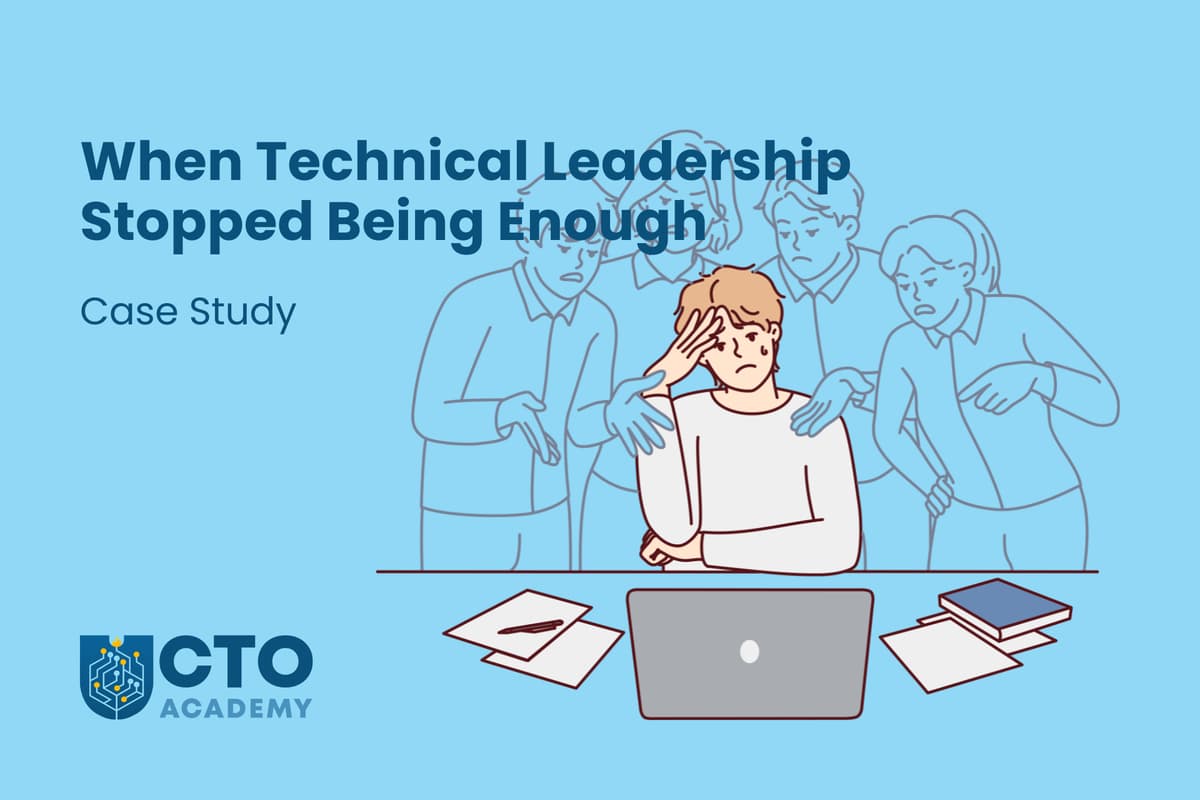

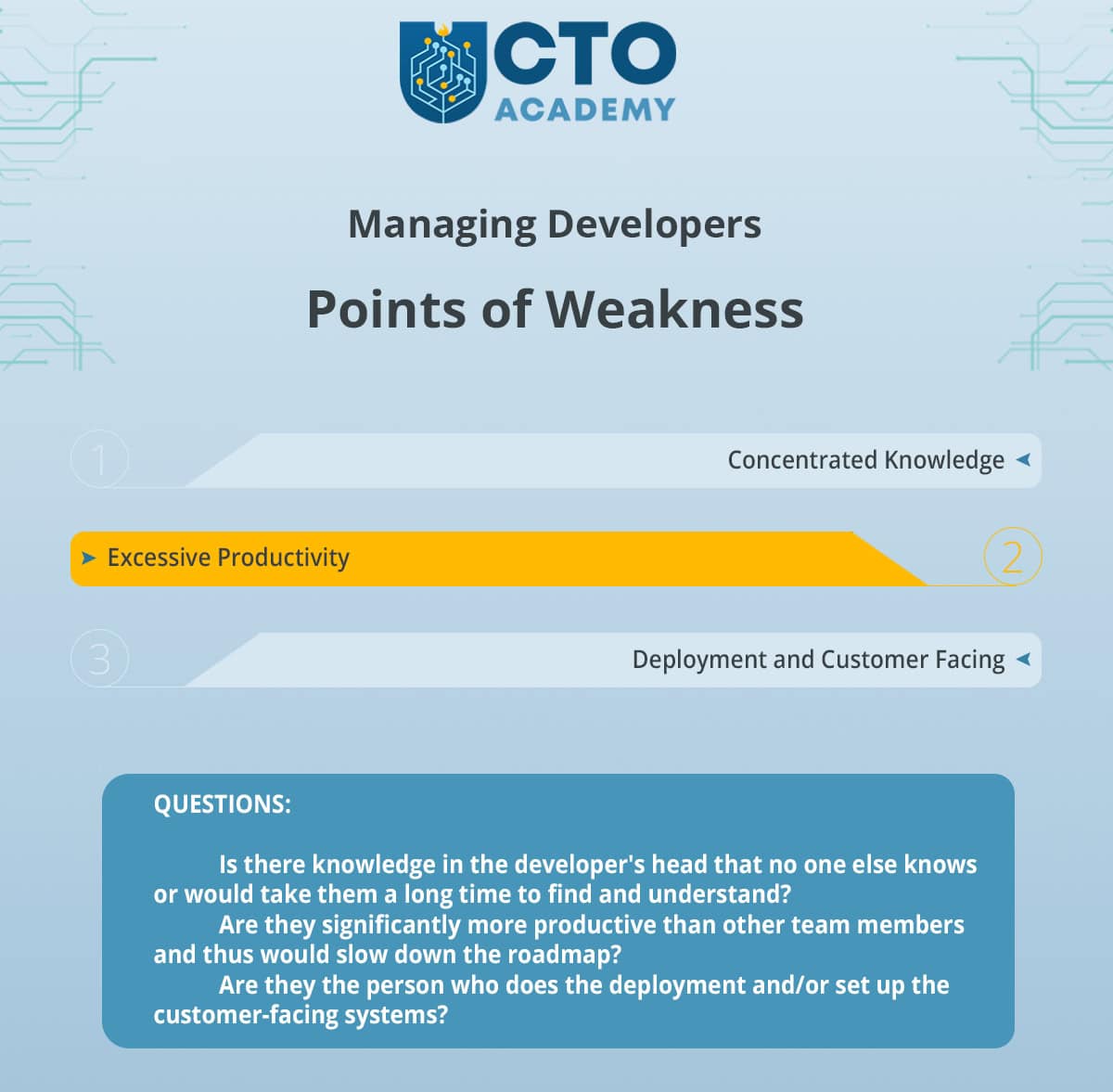


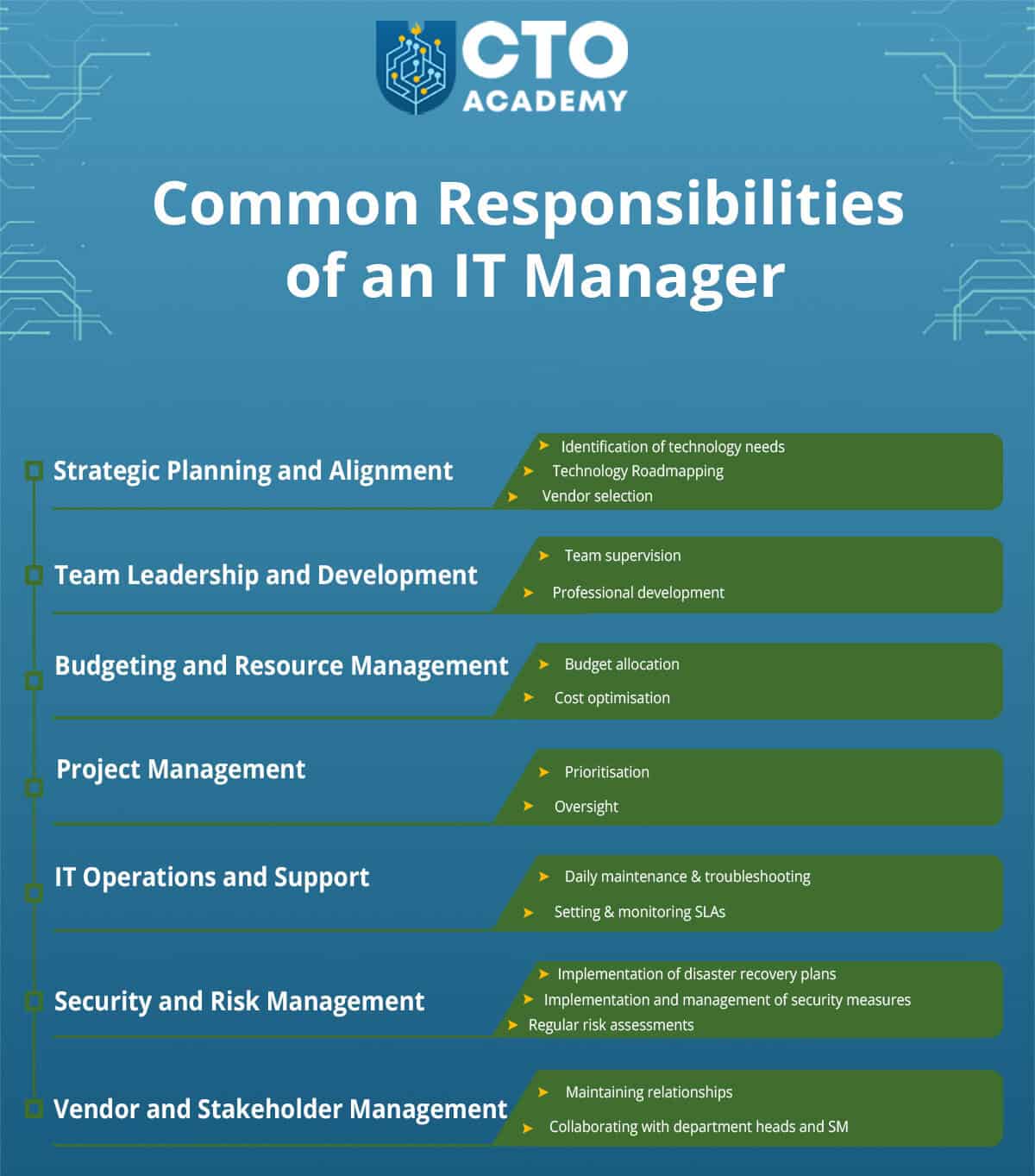











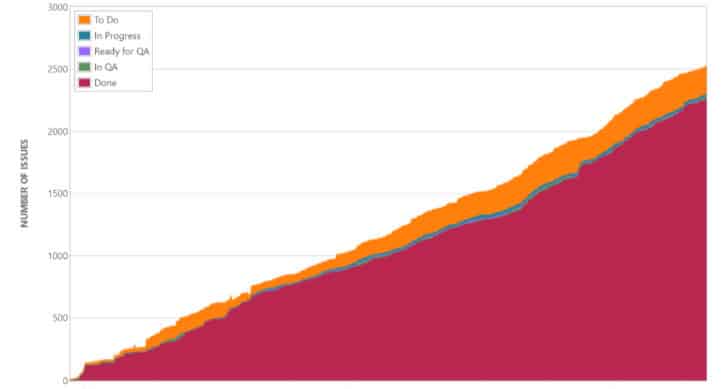

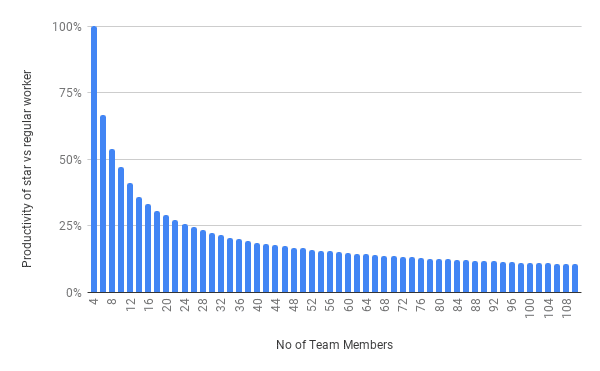
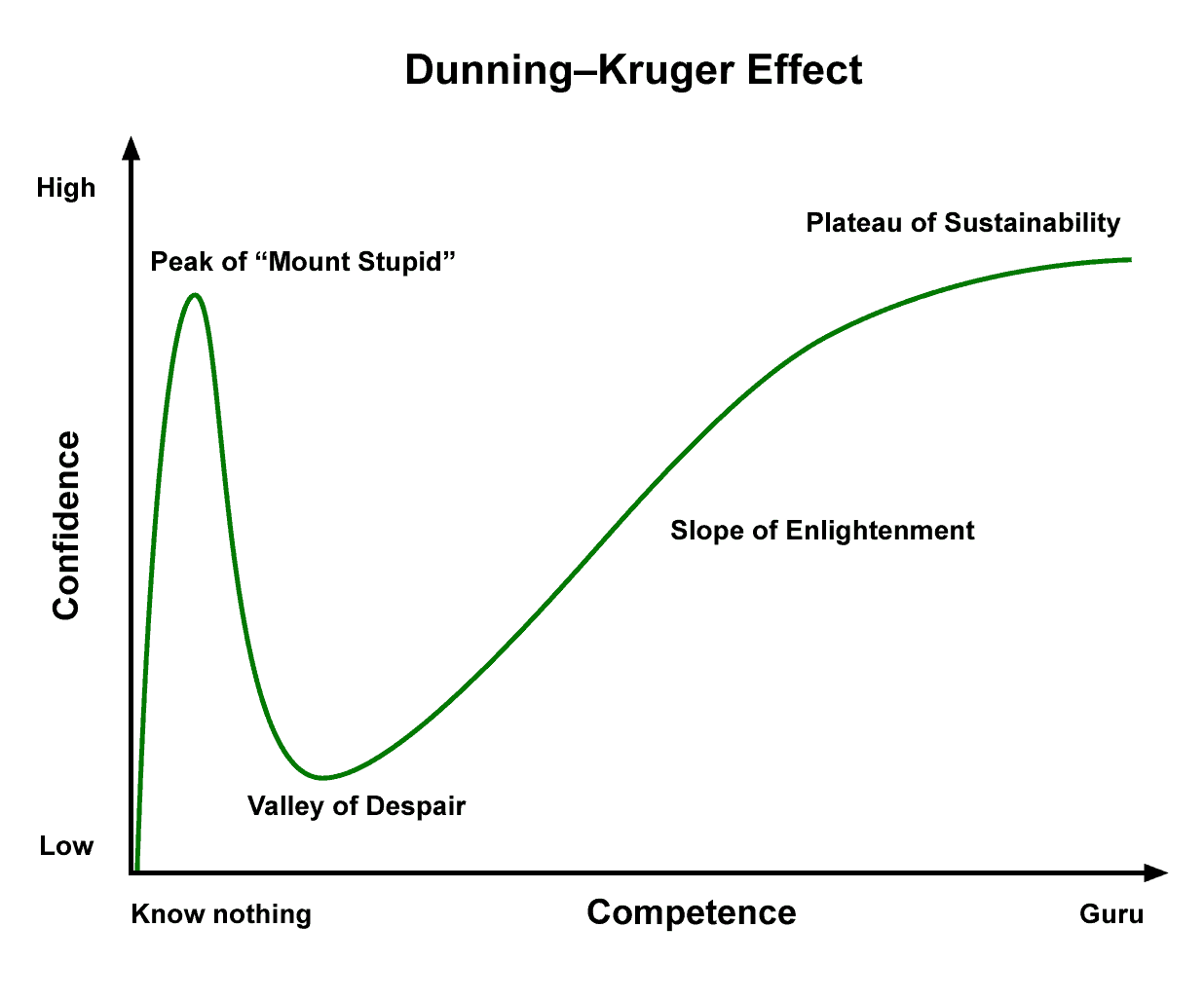
Response
Before jumping on ceremonies with his team, Justin should instead focus on two primary areas:
Understand the current state of affairs: what works well, what doesn’t, how is the current process working or not, the state of tech debt, where are the expertise and skills deficiencies, who are the leaders and those with potential and who needs help and coaching, etc. This takes time but through his interactions with the team, Justin would need to collect this kind of information.
Understand where things should be down the line in terms of how he and his team can best support the business, deliver great customer value, improve the products, the operational efficiencies and others.
Doing these two can occur in parallel and in the process, Justin can be transparent with his team about what he is after. That would open up his team, knowing that their new leader has a purpose in making things better. During these two activities, he should do a lot of listening while also articulating his objectives. These two combined nurture trust and inspiration. In addition, they would be the needed context for Justin to formulate, with help from his team, a roadmap to make things better. Priorities need to combine bottom up and top down feedback and he needs to be transparent about this. Where he sees conflict between these two, he also needs to be transparent and tell his team why their feedback is leading the way or why top down considerations need to dominate for the moment.