Next MBA Cohort Starts Monday, July 6th, 2026

Review Pricing and Join the Cohort

CTO Academy Logo
Log In

Category: Technology Leadership

  • CTO Academy Launches Scholarship Programme in Partnership with Women Who Code

    CTO Academy Launches Scholarship Programme in Partnership with Women Who Code

    September 2022

    CTO Academy is on a mission to empower global technology leaders by helping them combine their technical capabilities with high impact leadership skills.

    Embedded within this mission is a commitment to support greater diversity and balance within senior technology leadership teams.

    Women Who Code is an international nonprofit dedicated to inspiring women to excel in technology careers. WWCode is building a world where diverse women and historically excluded people thrive at every level.

    So it was a natural fit for collaboration that saw the recent launch of the CTO Academy Scholarship Program with a limited number of places each year being made available on CTO Academy’s executive leadership course The Digital MBA for Technology Leaders to WWCode members identified as having the potential to make a real impact in senior leadership roles.

    The program was formally launched in June 2022 with the award of two scholarships to Bianca Glasner, Head of Engineering at Findologic in Austria and Tina Hang, Senior Software Engineer at Parent Square in California.

    Bianca commented:

    “I was looking for a course to further improve my Leadership skills and position myself as a Technology Leader. When I saw the collaboration between WWCode and CTO Academy I was excited to apply as I saw the Digital MBA curriculum was definitely a good fit for me.

    I am really enjoying the course and see real benefits to learn more about Leadership, developing a product and making the right technology decisions.

    I know I’m going to get a lot out of the course not only for me but also for my team”

    Alaina Percival, CEO and Co-Founder of Women Who Code said:
    “Providing paths to technical education for diverse women is one of the core ways that Women Who Code works towards our mission to empower diverse women in technology careers. We’re proud to be partnering with CTO Academy to provide these valuable scholarship opportunities to our members.”

    Andrew Weaver, CEO at CTO Academy further added:
    “CTO Academy is focused making technology leadership training both accessible and practical so we’re excited to be working with Women Who Code and helping talented tech leaders like Bianca and Tina accelerate their career and the impact they can make within for their organisations”

    You can find out more about CTO Academy and our leadership courses here.

    For more about Women Who Code and their mission visit here

  • Tech Leadership, In So Many Words … #3 Perception

    Tech Leadership, In So Many Words … #3 Perception

    “We don’t see things as they are, we see them as we are”  Anais Nin

    Perception is often at the core of leadership.
    Because no one cares about our real intentions.

    To become a successful technology leader you need to acknowledge and understand how perception affects your relationship with other people and from that, your ability to lead.

    Key pillars impacting the perceptual process;

    – Objective perception is difficult if not impossible
    – Every person has their own unique frame of reference
    – Interpretation is dependent on factors not always related to the immediate situation
    – Energy expended on a task can be relative to our perception of its importance

    So how do you bridge the gap between your perception and their reality?

    Finding Out, What They Think Of You

    If you don’t know how you are perceived, you cannot change things and changing people’s perceptions can only come by understanding their reality and potentially changing your own behaviour.

    Feedback is an important but often uncomfortable step to take.
    It’s a process that enables you to protect yourself from erroneous perception and to both work and be seen to work empathetically by considering different points of view.

    You have to be open to constructive criticism, helping to make sure your leadership actions match your words and improving how you communicate the reasoning behind your decisions.

    Consider also the impact of body language and the science of influence.

    One small step towards gaining more influence with an individual is the use of mirroring.
    When you mirror someone’s body language and words, the other person tends to engage more because they get the sense you’re doing the same.

    It’s how we’re wired so use it.

    Influence is a powerful tool in breaking down communication barriers and getting people to understand more about your motivations.

    If you want a deeper dive into this topic, Influence: The Psychology of Persuasion is the book to read.

    Want to learn more?

    We cover this and other communication topics within our executive leadership course, The Digital MBA for Technology Leaders.

  • Deep Listening and Adopting a Zulu Principle

    Deep Listening and Adopting a Zulu Principle

    “I have a habit of completing other people’s sentences for them ….
    Is that a problem?”


    Was a question pitched to me during one recent leadership coaching session

    Rather inevitably my coachee then decided to interrupt before I could finish my response …

    Whilst it was a mildly amusing moment we both recognised, my recognition was partly introspective on the basis that a leadership skill I had to develop over time was the art of deep listening.

    That’s because in the disappointingly short list of my leadership qualities at the time … Deep listening wasn’t near the top

    I wouldn’t say that I’ve since cracked the skill completely
    But I’ve seen it’s important role for any effective leader.

    Tony Robbins talks about The Power of Deep Listening and his 4 Key Tenets …

    EYE CONTACT

    “By maintaining good eye contact, you are demonstrating to your conversation partner that you are fully engaged and interested in what he or she is saying. A good guideline to follow is the 80/20 rule, in which 80% of the time your eyes are meeting your speaking partner’s, and 20% of the time, your eyes are roaming as you gather information to say.”

    PRESENCE

    “The average person speaks between 135 and 160 words per minute, but the average person’s brain works between 400 and 600 words per minute. This means your mind is going a lot faster than your conversation partner’s mouth, which makes it easy for your mind to drift. It’s up to you to stop your mind from shifting away from the conversation and to be truly present. Not only will you be able to fully absorb what your partner says, you will be able to respond in kind, which makes them feel appreciated and understood.”

    NONVERBAL FEEDBACK

    “There’s nothing worse than speaking to someone who gives no verbal feedback. It’s like talking to a wall. Make the effort to give the occasional nod, smile, or other sign of recognition to your conversation partner. These nonverbal cues may seem trivial, but have tremendous impact by showing your interest, understanding and involvement in the conversation.”

    CONNECTION

    “When you are speaking one-on-one with someone, position your body in a way that creates a safe and welcoming space for him or her to speak openly. Lean slightly in, open up your chest, pull your shoulders back, and fold your hands gently in your lap or on the table in front of you. If you are standing, form a reversed hand steeple, in which the fingers come together to form a point. When someone steeples in the lap area, it means they are confident about what they are hearing.”

    Our very own Joseph Trodden delivers a fabulous lecture on “Deep Listening” in The Digital MBA for Technology Leaders where he mentions a Zulu principle called Sawubona …

    “There’s a principle I like that comes from the Zulu people,
    where instead of saying ‘hello’ at the start of a conversation,
    they say ‘sawubona’.

    This roughly translates to ‘I see you’ …

    It’s about taking a specific moment before they engage in dialogue to recognise that the other person has their own thoughts and perceptions, their own values and experience, and that whatever they say is important to them.

    It’s recognising the validity of them as a person, that you’ve come together to share perspectives, and the conversation can only be truly meaningful if we approach it with that level of respect for each other”

    How gorgeous is that?

    Pack Sawubona into your leadership toolkit
    and you won’t go far wrong.

    #leadership #deeplistening #sawubona #cto #ctoacademy

  • Improving the Cybersecurity of your Company: The Complete Guide

    Improving the Cybersecurity of your Company: The Complete Guide

    Cybercriminals are getting better at threatening the cybersecurity of your company

    There is no doubt that improving the cybersecurity of your company is more important than ever.

    Cybersecurity Ventures predicts cybercrime will cost the world in excess of $6 trillion annually by 2021, up from $3 trillion in 2015. Hackers are always looking for new ways to target organizations, steal their data and extort them.

    As tech leaders, and specifically CTOs, are faced with the main responsibility of preventing leaks and eliminating threats, we want to give an overview of the best actions you can do as a tech leader to improve the cybersecurity of your company.

    What is the importance of improving cybersecurity in your company?

    Cybersecurity is a key issue that has been rising in importance over the last few years. The internet and computer networks are integral to our society and economy, with almost every company on the planet having a web presence.

    Cybersecurity is not just about preventing cyberattacks but also ensuring that systems are secure enough to withstand any attack as well as protecting them from data breaches and hacks.

    The main problem is, that there are more incentives for hacking than ever before, with companies spending millions on cybersecurity products yearly while many of them still fall victim to an attack.

    5 Methods for securing and improving the Cybersecurity of your Company

    As we’re a tech leadership academy, we have some great alumni and current leaders with us. We reached out to get the recommendations from them and here’s our collected list of the best advice.

    1. Communicate Potential Security Threats

    Andrew Ryan, Head of Development, UK

    Make sure to communicate potential security threats, including (and perhaps especially) ones involving social engineering – that’s key to improving the cybersecurity of your company

    Not everyone in the company will have as high a level of tech literacy and awareness of these things, let alone know what a cyber defense strategy is, so don’t take it for granted.

    Anecdotally, I sent an email blast to the entire company warning of scam emails from people pretending to be clients or even other staff members. Not two hours later, our CEO had a message from an acquaintance on linked in asking for his input on something if he could click a link. My email set alarm bells ringing. He phoned the guy directly and indeed, his account had been hacked and was sending out phishing messages.

    2. Engage your team in training, scans, and testing

    Jim Mortensen, CTO / CIO, USA

    “After doing a couple dozen buyer/investor-side technical due diligence projects over the last 9 months, I see 6 consistent gaps in security practices of organizations. “

    We’ve turned these points into actionable items:

    Make security awareness training for employees

    Many companies are failing to train employees on how to avoid cyber attacks. With hackers becoming more skilled, it’s important that we do all we can to protect ourselves from these security threats. Encrypting passwords, 2-factor authentication, and securing inboxes, should all be on the list of items.

    Make regular external vulnerability scans

    It is important to keep your website secure. A regular external vulnerability scan can help you identify vulnerabilities and fix them before they become a major problem.

    Start penetration testing for security threats

    Penetration testing is the process of simulating an attack on a computer system or network. Penetration testers are asked to try to get into a company’s system, whether it’s through social engineering, hacking, or other means. The goal is for companies to test their actual security risks and determine where they’re vulnerable before real hackers can break in. You can get software for this like www.invicti.com or www.getastra.com/pentest

    Build an understanding and improve response to applicable compliance requirements (e.g., PCI DSS, HIPAA)

    Whether it’s PCI DSS, HIPAA, or GDPR, companies of all sizes must be aware of and implement new compliance regulations to ensure that their data is safe and secure.

    Improve management/oversight of vendors (who often have these same security gaps)

    Make sure to have management and/or oversight of the vendors you’re collaborating with. Their security threats can easily become your security threats.

    Build regular internal IT risk assessments

    The best way to protect your company is to make sure you have a strong, reliable IT infrastructure. That’s why it’s important to regularly assess the risk of your system and take steps to minimize them.

    3. Start with people and company values

    Paul Clegg, CTO, UK

    Starting simple. Start with People. they’re a double-edged sword. Their awareness and behavior are paramount before implementing specific tools. e.g our most basic tool is company values.

    For example, our values are professional, focused, creative, and collaborative. We’ve given our team examples of behaviors that support staying secure in relation to company values.

    4. Get Software Involved

    Morgan Davies, Software Development Manager, UK

    The best way to avoid security issues is to get InfoSec involved in the design and development process of software. If security is only considered after features are developed, vulnerabilities will get through.

    We can measure:

    • Whether features undergo a security review
    • Whether security review slows down the development cycle
    • How well security is integrated into the delivery lifecycle
    • Whether automated testing covers security requirements
    • The use of pre-approved libraries, packages, toolchains, and processes

    5. Strengthen your incident response plans

    Josh Lopez, CTO, UK

    As was mentioned here already, security awareness training is of paramount importance.

    Zero trust is also critical for improving the cybersecurity of your company. You’ll have to implement network segmentation within the environment with least permissive access always. 

    A shift I have also seen is not if you will be hacked, but when.

    Ensure your incident response plans are adequate and test them. See how long it take you to detect, respond, contain, and recover from an attack. Many companies invest in AV, IDS/IPS technology, among many others, but the human response is weak.

    Although these tools are essential, as well as frequent vulnerability management and mitigation, making sure you are able to really respond to an incident effectively is key.

    Remember, it’s not if you will get hacked, but when!

    Bonus tip from Pedro Sampaio, CTO, Portugal

    You can try software like Riot. We just started using it and it is a really amazing tool.

    Conclusion

    It’s clear that improving the cybersecurity of your company clearly has technical elements and human elements to them.

    The security of your organization is dependent on the members within it. There are many systems, processes, and software that can be used to defend against cybersecurity attacks but if your team and organization are not trained to prevent or avoid them then your chance of it happening is getting higher.

    If you want to improve your tech leadership, consider signing up for one of the CTO Academy courses or subscribing to our newsletter.

    Stay safe,

  • Tech Leadership, In So Many Words … #2 Self

    Tech Leadership, In So Many Words … #2 Self

    Leadership comes more naturally when you’re able to find alignment and flow between career and values.

    Much of this comes down to how well you understand yourself and your own motivations.
    What does your definition of success need to look like?
    Is there a driving purpose and/or intrinsic motivation at the core of what you do?

    Intrinsic motivation is doing an activity for its inherent satisfaction rather than for some separable consequence. In other words, doing something you love …

    Being CTO is much easier (or at least less challenging) when working on something you love, rather than a motivation driven by less intrinsic factors, pressures or prestige.

    Paul Graham wrote a wonderful essay How to Do What You Love including a passage about the “false friend of prestige” …

    “What you should not do is worry about the opinion of anyone beyond your friends. You shouldn’t worry about prestige. Prestige is the opinion of the rest of the world. When you can ask the opinions of people whose judgement you respect, what does it add to consider the opinions of people you don’t even know?

    This is easy advice to give. It’s hard to follow, especially when you’re young. Prestige is like a powerful magnet that warps even your beliefs about what you enjoy. It causes you to work not on what you like, but what you’d like to like.

    That’s what leads people to try to write novels, for example. They like reading novels. They notice that people who write them win Nobel prizes. What could be more wonderful, they think, than to be a novelist? But liking the idea of being a novelist is not enough; you have to like the actual work of novel-writing if you’re going to be good at it; you have to like making up elaborate lies.

    Prestige is especially dangerous to the ambitious. If you want to make ambitious people waste their time on errands, the way to do it is to bait the hook with prestige. That’s the recipe for getting people to give talks, write forewords, serve on committees, be department heads, and so on. It might be a good rule simply to avoid any prestigious task. If it didn’t suck, they wouldn’t have had to make it prestigious”

  • Tech Leadership, In So Many Words… #1 Curiosity

    Tech Leadership, In So Many Words… #1 Curiosity

    When involved in tech you’re always learning something new.

    New language, new version of a language, new frameworks etc.

    But as you move into managerial and leadership roles then the learning process shifts from the technical to the personal, from a more natural comfort zone into the sometimes un-chartered waters of soft skills and people management that make the difference in senior roles.

    So it helps when managing this transition if you’re already instinctively curious, motivated by constant learning and development.

    And let’s face it … constant learning should be at the core of what drives our personal development.
    Above and beyond the rigours and demands of work and ambition, setting aside time to set new goals and achievements is all part of building a toolkit for both personal and professional fulfilment, and they tend to go hand-in-hand.

    Give yourself space to learn and grow outside immediate work requirements …
    Maybe a different form of language, hobby, musical instrument, drawing.

    The more you explore, the more passions you discover and creative tools you can bring into the work environment.

    “The only way to win is to learn faster than anyone else.” — Eric Ries

    For sure, those who lead also read, their curiosity sated by reaching outside their immediate world.

    Warren Buffett and Bill Gates famously consume huge amounts of reading material to maintain their edge and it’s a consistent theme that leading entrepreneurs spend a significant amount of their working time, reading.

    When asked “How to become a good CTO” it’s almost always the soft skills and that endless thirst to learn, grow and be curious that makes a key difference.

    But we’re all “time poor” and no-one can deny that curiosity and learning takes time.

    Which is why the art of delegation becomes so important …. to give you the space to lead, learn and be forever curious.

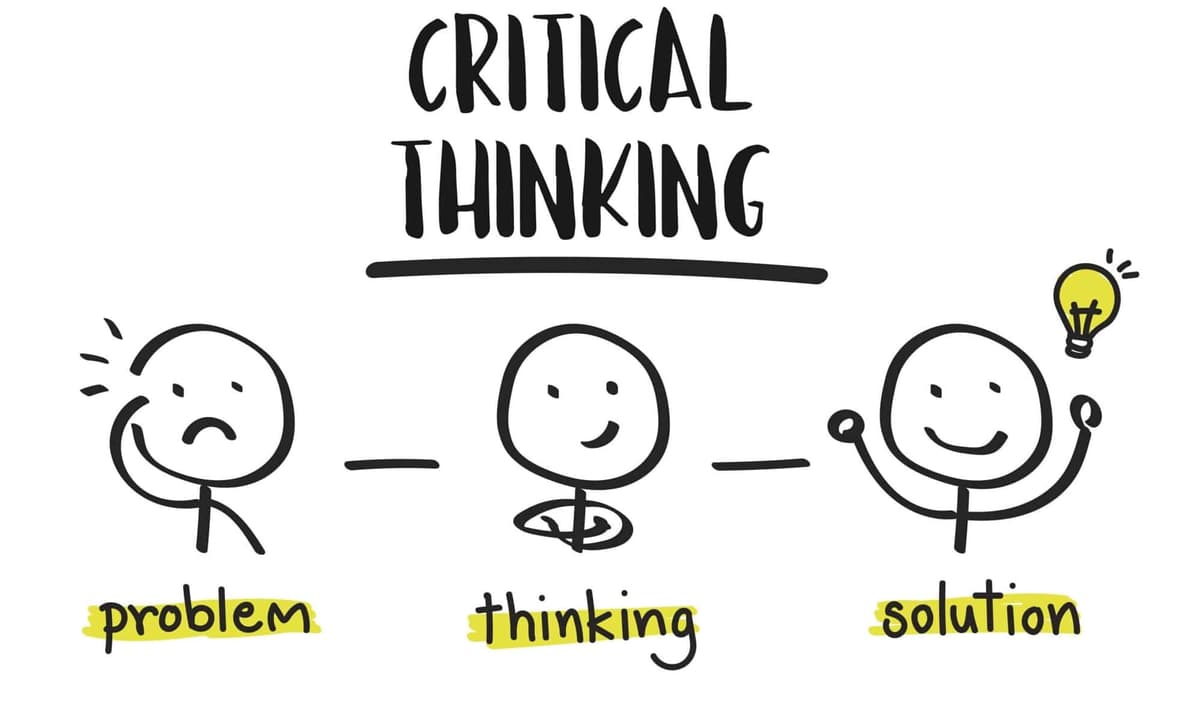
  • 10 Steps for CTO`s to Improve Their Critical Thinking Skills

    10 Steps for CTO`s to Improve Their Critical Thinking Skills

    Critical thinking skills are vital in any leadership role, but when you’re leading the technology arm of a business it takes on even greater importance – both for the key decisions you need to make and for the technical people you need to lead.

    A CTO needs to be able to reason, understand and solve problems.

    Critical thinking is the ability to evaluate the truth of an argument and its premises by subjecting them to rational analysis.

    Skills such as logic, analytical reasoning, and problem solving cannot be underestimated in today’s world which is characterised by complexity and ambiguity.

    In a world full of information and data, technology leaders and CTOs need to rely on their critical thinking skills more than ever.

    This is because they are often asked to make decisions without enough knowledge or data that would help them make an informed decision.

    So here are 10 steps for a CTO to improve their critical thinking capabilities;

    1. Have an Open Mind and Be Willing To Change Your Beliefs When Necessary

    When you have an open mind, it allows you to be flexible and see things from a different perspective.

    When you are open minded, then you will be more willing to change your beliefs if necessary.

    2. Let Go of Any Judgemental Attitudes & Preferences

    Judgemental attitudes are at the root of many frustrations and leadership blockages.

    When we judge without understanding, we create separation and disunity. We are all on a journey to enlightenment; it is not our job to judge others for their paths or speed up their journeys.

    Don’t judge others because of their choices. The world would be boring if we all liked the same thing. Don’t pigeonhole yourself into one category – this does no good for either party involved.

    3. Practice Constructive Listening

    Constructive listening is a skill that will come in handy when it comes to solving disputes. It also affects the work environment and helps to create better customer relationships.

    Listening is about hearing, understanding, and acting on what is being presented. The best way to do this is by using constructive listening skills. This means being non-judgemental and focusing on what the speaker has to say instead of trying to change their point of view or argue with them.

    To start, it is important to avoid interrupting the speaker. If you have a countering opinion or idea, it is best to wait until the speaker has finished their thought before you speak.

    Remember that constructive listening involves making eye contact with the person speaking and showing them that they have your attention by nodding and giving them feedback in an appropriate way.

    It can be difficult not just for people who don’t know how to listen but also for people who do know how to listen.

    Active listeners are not only trying to understand what someone says, they are also trying to figure out why they said what they said and what they think about it as well.

    4. Develop Evidence-based Beliefs

    Beliefs are often assumed to be ideas that we accept as being true. Beliefs are not always facts though, but rather they are ideas or opinions that we have about a certain topic.

    Develop evidence-based beliefs is a process of recognizing the difference between beliefs and facts. There are many pieces of information in our world that we can’t see or feel or taste, but we still hold opinions about those things.

    Beliefs are tough to change but it’s important to test our beliefs when presented with new evidence. When we encounter information that challenges a belief, it is important to consider whether there is evidence for the belief being true.

    We should never disregard any piece of information as false or invalid simply because the belief doesn’t align with what we want to believe.

    There are two types of evidence-based beliefs: empirical and logical. Empirical evidence is derived from sensory experience, while logical evidence is derived from logical argumentation.

    5. Evaluate Ideas, Claims, Beliefs, Statements

    Evaluating ideas, claims, beliefs, statements can be challenging.

    In order to evaluate an idea, a statement, or claim, you need to think about the following:

    -Is the idea or claim possible?

    -Is the idea or claim reasonable?

    -What is the purpose of this statement?

    6. Ask Probing Questions

    Questions are the bread and butter of any conversation, interview, or meeting. They allow you to learn more about the other person and to explore topics that may be outside your area of expertise.

    There are three types of questions that you can ask to get the information you need to complete a project:

    Open-ended question: Let your client talk freely about the topic.

    Closed-ended question: Ask the person to answer with a yes or no.

    Probing question: Ask more detailed questions about specific aspects of the topic.

    With this in mind, it is important to ask probing questions that will not only provide answers but also create a dialogue. Questions should be broad enough so that they can generate a conversation, but specific enough so that the other person knows exactly what you are asking about.

    7. Think About New Concepts from Different Perspectives

    You’ll want to think about new concepts in a variety of different perspectives.

    The first perspective is what your idea means for you and your team. What’s the effect for your employees, stakeholders, and anything else that comes to mind? The second perspective is what it means for your company. What does this mean for the products or services you’re providing? Thirdly, shift your perspective to what it means for society, the environment, and anything else with a broad scope.

    The last perspective to consider is what it would mean for consumers or users of any product or service that impacts them. Would they be positive or negative about this idea? And how might they react in various situations if this idea were introduced?

    This is a great opportunity to get the creative juices flowing.

    Think about what you would want to do if you didn’t have any constraints or limitations. What would you do if you weren’t afraid of failure? Imagine that you don’t care what others think or how they’ll react. What would be possible in this case?

    As an example, imagine that your company gave you a free pass to go ahead and create something new. You no longer had any restrictions related to deadlines, budgets, or anything else. How might this change your process? Would it change your priorities? Would it change what kind of work you’re doing?

    8. Use Data to Support Your Point

    As humans we are predisposed to feeling emotions and making decisions based on those emotions. Data is able to make you feel more emotion, which in turn can drive you to a decision.

    Data often provides the insight that we need, but it has to be presented in a way that the human brain will comprehend. Numbers and statistics can be difficult for humans to process but if they are presented with the right visualizations, then it becomes much easier.

    Visualization is important because when humans see data visually their brains process it faster than if they were just looking at an Excel sheet of numbers. Visualizing your data allows for it to be memorable and shareable as well as simplified for your audience’s consumption.

    Data is the best way to prove that something is true or false.

    Data can be an effective way of substantiating claims that people make. It can also be used to disprove or dispel myths and misconceptions. Data provides quantitative answers, where other types of evidence may not exist.

    People might not trust a claim because it comes from a person they don’t know, but when the same claim is supported by data, it becomes much more persuasive.

    9. Avoid Inferring Too Much From the Data

    We should not rely on data alone for decision-making but instead apply other sources of information like intuition or expert opinion.

    The tendency to infer too much from data is called the “data fallacy.” This fallacy involves two types of errors: “misunderstanding the data” and “assuming that correlation implies causation.”

    Data is not a perfect truth and it can mislead us, so we should be careful with the conclusions we draw from it.

    10. Know your cognitive biases to avoid them

    Be aware of your personal thought patterns through self-analysis, for example, the tendency to selectively remember positive experiences and forget negative ones can lead to disappointment and feelings of hopelessness when things don’t go well.

    Incorporate feedback from others through honesty and humility – criticism is a good thing if you’re open-minded enough to consider it objectively and without defensiveness.

    Feedback that is too harsh or too critical should be reworded until it’s constructive, but feedback should always be accepted as a gift. It might just be what you need in order to improve your leadership and critical thinking skills.

    Build your critical thinking capability with CTO Academy – our online leadership skills courses and coaching can help you enhance your skills in this area.

  • 7 Steps to Become an Effective CTO

    7 Steps to Become an Effective CTO

    1. Define your vision for your future by setting goals

    When it comes to setting goals, many people fall victim to the “goal-setting paradox.” This is when a person sets unrealistic or uninspiring goals and then does not follow through with them.

    It’s important to be careful with what you set your goal as. It should be personal and something you really care about. It should also be something that is attainable and measurable, so you can see if you are on track to reaching the goal.

    When creating goals, it is also important to have a time limit for the goal so you can check in periodically on how close or far away from it you are.

    2. Find a mentor to help guide you during this journey

    Technical coaches or mentors can help you get the most out of your career. Their expertise will allow you to grow and advance in your field.

    Finding a technical coach or mentor can be an intimidating task, but it is important to do if you want to become more successful and achieve your goals.

    There are a few ways that you can find the perfect technical coach or mentor for yourself. One of these ways is to ask for referrals from people in your network. Another option is to inquire here at CTO Academy.

    3. Make a personal brand statement and learn how to articulate your technical and soft skills

    A personal brand statement is a very important factor in the success of any business. It should be smart, clear and concise, with an emotional impact.

    CEOs like Elon Musk, who has a goal to colonise Mars, and tech giants like Mark Zuckerberg have their own personal brand statements. They are powerful and have a clear goal for their company.

    In any business endeavor, it’s imperative to understand what you stand for. A personal brand statement helps you articulate your goals and values with clarity and conviction.

    Soft skills are the social skills that are not tangible and cannot be seen. They include things like communication, teamwork, problem-solving and time management.

    Many people tend to focus on their technical skills because these can be seen as more important. However, soft skills are just as essential to success in your career and life as your technical abilities.

    4. Get hands-on experience by taking on projects in areas you want to grow

    In order to get hands-on experience in areas you want to grow, you should start by understanding what it is that you are passionate about. You will then need to find opportunities.

    The best way is to reach out and ask people who have the skillsets that you want. Experience is the best teacher, so always try to get as much of it as you can. But it’s not just about getting a job or project. You should also take up side projects and volunteer work, or even just socializing with other people in your industry.

    5. Identify areas of strength and weakness in order to set yourself apart

    It’s important to know what you are good at and what you are not. It allows you to invest in those areas that will make the biggest difference and help you stand out from your competition.

    Some people are still not sure if they should invest in their strengths or work to improve on their weaknesses. The answer is both. Of course, you need to focus on your strengths but it is also important to work on building up your weak points as well.

    Try CTO Academy’s Strength and Weakness assessment for free.

    6. Network with people who are doing the work you want to do; get involved with professional organizations that represent your interests

    Networking is not an easy task, but it is a necessary one. The more people you know, the easier it will be to find a job in the industry you want to work in. You need connections for jobs to come your way. So find people who are doing the work that you want to do and get involved with professional organizations.

    You must remember that networking is an ongoing process. You cannot just network once and then expect all of your dreams to come true right away. In order for networking to be effective, you must keep at it and build relationships over time.

    7. Consider the diverse perspectives of people who are different from you

    It is always important to have an understanding of the perspectives of people who are different from you. When we only understand our own perspective, it can lead to biases and will impact the decisions that we make.

    When we are able to see through someone else’s eyes, it can be easier for us to empathize and understand them. We might also be able to see things from their point of view which will help us make better decisions about how they should be treated in the workplace or community.

  • 5 Ways An Organisation Can Fail Its Digital Transformation

    5 Ways An Organisation Can Fail Its Digital Transformation

    Digital Transformation Is Business Critical

    We live in a dynamic era one in which a new trend today can become a way of life tomorrow.

    Those who don’t adapt to these changes are at risk of falling significantly behind.

    It can be worse for organisations because those who don’t adapt are at risk of perishing.

    The Pandemic Has Accelerated Everything

    Today we live in a truly digital era.

    The penetration of mobile phones and the internet has completely changed our lives with the pandemic accelerating digital innovation further and deeper into our societies and everyday way of life than we could have possibly imagined just 18 months ago.

    Social distancing forced people to be confined inside their homes and virtually connected to the rest of the world. As a result of the global lockdowns, digital platforms including e-commerce, remote work, changed from being “nice to have” to “need to have” capabilities in running our lives – personal and business.

    Governments, businesses, schools, colleges, etc. had to dramatically shift their entire models and transactions online from meetings/classes to offering services through digital platforms.

    Even those people who were not familiar or particularly comfortable with online platforms pre-COVID had to become accustomed to more regular use.

    So the world of 2021 is more heavily dependent on the outcome of digital transformation than ever before, but here is the question I hear many times …

    What Exactly Is Digital Transformation?

    As every organization approaches digital transformation differently, it may be hard to define, however, I came across the following definition from The Enterprisers Project :

    Digital transformation is the integration of digital technology into all areas of a business, fundamentally changing how you operate and deliver value to customers. It’s also a cultural change that requires organisations to continually challenge the status quo, experiment, and get comfortable with failure

    Focus is on transforming the business and reimagining of business in the digital age, with technology serving to support the changed or new business model.

    Typically, a company’s digital transformation includes:

    1. Enhancing customer experience
    2. Optimization of business processes
    3. Integration of digital technologies
    4. Digital Innovation
    5. Changing the organizational culture

    To follow a famous example, Audi completely changed the way customers buy cars with its digital transformation by introducing an innovative showroom concept in 2012 called Audi City.

    Audi City promised to provide a one-of-a-kind brand experience and allowed customers to browse through the entire catalog of the Audi range hands-on in stores, where large showrooms were not possible to set up.

    At Audi City, London, sales went up by 60% as compared to the traditional Audi showroom that previously occupied the site.

    Moreover, the digital showroom only stocks four cars, thus reducing the cost of having to hold a large volume of stock that often outnumbers the periodic profit.

    But is digital endeavor easy?

    Most definitely not. What should be a positive change for organisations can go terribly wrong and rebound against them.

    In this article, I highlight five of the potential challenges an organisation might encounter and fail, if not mitigated against.

    Potential Challenges

    1. Ignoring organizational culture

    Culture is the integration of values, practices, behavior, and experiences of the employees as well as the vision, mission, and values of an organization.

    According to Capgemini Consulting’s 2017 study on “The Digital Cultural Challenge: Closing the Employee-Leadership Gap” the majority of respondents (62%) consider culture as the number one hurdle to digital transformation.

    Capgemini defines digital culture as a set of seven key attributes integrated with employee centricity.

    Customer Centricity: Use of digital solutions to transform the customer experience

    Innovation: Behaviors that support risk-taking, disruptive thinking, and the exploration of new ideas.

    Data-driven decision making: Use of data and analytics to make better business decisions

    Collaboration: Creation of cross-functional, inter-departmental teams to optimize the enterprise’s skills

    Open Culture: Partnerships with external networks such as third-party vendors, start-ups, or customers

    Digital First: Adopting digital solutions as default

    Agility and Flexibility: Speed and dynamism of decision-making and the ability of the organization to adapt to changing demands and technologies

    Organizations that failed to nurture such a digital culture, failed to empower their employees to innovate in delivering value propositions that deliver better value creation and better experience for the customers can find it very challenging to remain competitive.

    Zoe Fragou’s recent article Forget Tech Change, It’s Culture Change That Matters Now, describes the common factors that lead to culture change failure.  

    2. Absence of competitive strategy

    According to Michael Porter, there are three potentially successful generic strategic approaches to outperforming other firms in an industry, as a competitive strategy that is relevant for digital strategy as well:

    Overall Cost Leadership — increasing market share, enhancing the production capabilities

    Differentiation — being unique

    Focus — market segmentation or product segmentation

    Organizations may encounter unexpected competitors from the marketplace due to the low barrier to entry that digital technologies provide.

    To remain competitive and successful, an organization shall implement a competitive strategy considering the strategic approaches based on the analysis of the threat of new entrants, threat of substitutes, bargaining power of suppliers, bargaining power of customers, and industry competitive rivalry.

    3. Stand-alone digital strategy

    HBR’s recent article Digitizing isn’t the same as Digital Transformation articulates the differences between mere digitization and digital transformation. Digitization is just an optimization initiative rather than a transformation initiative.

    An organization’s strategy shall embed digital as part of it while considering strategic approaches for being competitive. Organizations that tend to define a separate stand-alone digital strategy may not sustain the competition.

    To remain successful in the digital era, an organization shall implement a competitive strategy that embeds digital strategy and implement transformation initiatives rather than isolated digital optimization initiatives.

    4. Lack of agility

    In the rapidly changing environment, organizational agility is another critical factor to become successful with digital transformation initiatives.

    Organizations shall develop various capabilities including:

    Awareness — be aware of market, competition, technology, business models, etc

    Data-driven decision making — make better and informed decisions through the use of data and analytics

    Faster execution — execute the decisions faster

    While building the capabilities to enhance organizational agility, organizations shall consider capitalizing on internal cross-functional collaboration rather than silos and external ecosystem collaboration with partners in the supply chain for optimizing and digitalizing integrated processes in providing faster, cheaper, better products and services to enhance the digital experience for the customers.

    Organizations that don’t invest in developing such capabilities and building agile culture may find it challenging to remain successful.

    5. Outdated skill-sets

    Organizations shall invest in upskilling, re-skilling their employees to nurture the capabilities for the digital era supporting the digital transformation and empower them to innovate.

    Best innovations are results of contribution from the empowered employees who understand the products, services, and customer needs.

    The creative factor of innovation and human adaptability to upskill and re-skill augmented with technology is more effective.

    People determine the success of digital transformation combined with organizational agility capabilities.

    Organizations must consider people’s aspects and upgrade their skill sets to ensure a successful rollout of digital transformation initiatives.

    About the Author

    Gunasundaram Gnanamuthu is a Digital and Agile Transformation Leader with a fantastic career journey from humble South Indian village to his current role as Head of IT at NLG Oman. He is a lifelong learner and a great friend of CTO Academy.

    About CTO Academy

    CTO Academy deliver leadership skills courses, coaching and career development support to ambitious technology leaders around the world.

    Disclaimer: The views, thoughts, and opinions expressed in the text above belong solely to the author, and don’t reflect views of the author’s employer, organisation, committee, or other group or individual.
  • Time To Let It Go …

    Time To Let It Go …

    So here is the scenario …

    I’m running as fast as I can alongside my 5 year old son’s bike, initially holding onto his seat to make sure he does not fall.

    I’ve made sure we are on a quiet road and there are no cars or obstacles for him to seriously hurt himself. 

    Now it’s all about knowing when it’s time, time to let go, time to let him ride off himself.

    What I do know is that this setting will allow him to learn in his own way and whilst it’s tough for us to let our kids go out into the world and learn by their mistakes, it’s also the aspect of parenting you accept and almost naturally absorb, despite the reservations   

    Strangely I have seen tech leaders (including myself) forget that we have to apply a similar approach to the development of our teams!

    “Leadership is not about forcing your will on others. It’s about mastering the art of letting go.”— Phil Jackson

    Those of you who have read my previous blogs and/or who I coach, will be familiar with the similarities I draw between leadership and parenting.  

    Personally I believe it goes beyond an analogy because the emotions, actions and responsibilities are very similar between that parental/home setting and the leadership/work one. 

    What Are Leadership Responsibilities? 

    As a leader of teams, we are not only accountable for their output,  but we have a responsibility towards them as individuals.

    Effective leaders understand the duality of leadership between helping your organisation and stewardship of the people in the team that they can learn and grow around you and one day leave to further their own career. 

    Ineffective leaders look at the short term and often selfish benefits of motivating their team, without pro actively encouraging people to build out their technical skills, develop longer term  soft skills, and create a working environment that encourages a more rounded and structured way of learning, that thinks of the long term benefits for individual as well as the organisation.

    For this to happen, we need to ensure we give them the chance to take on new opportunities and the freedom to make mistakes.  

    But I think letting go is even more of a challenge for the CTO and tech leaders than most other C-suite roles because we are instinctively problem solvers, lateral thinkers and love getting under the bonnet of a technical challenge. Our instinct is to dive in deep as soon as possible but in a leadership role this is neither a good idea for your own ability to make an impact nor for your team to grow and learn into their roles.

    Alongside that natural instinct to get our ‘hands dirty’ we have the pressures of clients, management, deadlines, technical challenges, all demanding rapid answers and results, so it’s perfectly understandable for us to want to just shred all plans to delegate and just dive right in.  

    If there are consistent themes to my coaching sessions with tech leaders around the world they are … 

    “it was just easier for me to clear down tickets today”, 

    “I quickly just wrote the code for the new function x last night as I had some spare time”, 

    “I decided to draft the documentation before giving it to the Head of XYZ so that they only needed to finish it off”, 

    … different statements, familiar theme? 

    It’s easier and faster if I step in and do the work, rather than spend the time to train, teach or let someone else have a go. 

    This is such a fundamental leadership mindset that we have to train ourselves to change and it’s sometimes quite a personal challenge having to push back hard on a natural and extremely insistent instinct to just sort it.

    But in the words of Elsa (I could not help the Disney reference) … We need to let it go and give our teams the chance to take over, learn and fail and fall, if that is what is needed.  Just like I had to with my son on his bike.

    “Are you ready to take the first steps toward leader-leader? Are you ready to take the first steps toward an empowered and engaged workforce? Are you ready to embrace the changes that will unleash the intellectual and creative power of the people you work with? Do you have the stamina for long-term thinking?” ― L. David Marquet

    How Do You Learn To Let Go?

    To let go, and to let our teams grow, we must first recognise what we are holding on to.  

    This can be challenging but if you’re in any form of leadership position then you’re likely to have done some of  this in the past or seen colleagues adopt techniques that help them understand what needs to be kept, or released.

    Maybe when you stopped writing production code because you realised your team were just better at it than you,your time better spent looking at the bigger picture of the product.

    Or you stopped prioritising tickets and let the Operations team follow the processes that you originally helped create, or it could be you stopped writing user stories and allowed your product managers to have full accountability of the direction of a product?

    These are scenarios I’ve seen myself and with my coaching clients, where they’ve realised (not always very quickly) the longer term benefits of delegating certain tasks.

    It’s that dawning realisation that a key part of your job as leader is to trust your team and that if you’ve recruited well then they are as qualified and skilled and maybe even more up to date than you to do a particular task. 

    There needs to be a realisation also that your pay grade now is such that the other managers and leaders around you are looking for you to add value at a higher, more strategic level in your organisation and remaining down in the technical weeds will not reflect well on your operationally or strategically.

    Your job is to inspire and facilitate the team in a servant-leader structure or a leader-leader culture.

    How To Build a Leader-Leader Culture

    There are many techniques of letting go and letting your team flourish, but a style described in Turn the Ship Around! by David Marquet is the Leader-Leader culture, one of my favourite methods for empowering your team to take ownership and win.  

    This technique moves away from detailing exact processes and systems that your team must follow or articulating tasks they must do.  It enables the team to make their own choices and do ‘work’ they decide on.

    To deploy this type of culture in your organisation, your role as the leader has to change.  

    You need to let go and step away from the day-to-day and your role is to create an environment for your team to thrive and lead in.  You must communicate and empower the team to understand what the overall outcomes need to be and importantly why those outcomes are important to the organisation.

    You need to be clear about the context of each situation and challenge, allowing them to come up with the solutions and providing them with the autonomy to execute in the way they best believe it will meet those outcomes.

    This technique is hard to execute because as technical leaders we find it difficult to step away from making those hands-on operational and day-today decisions.  

    But this is the key learning point as leaders. We have to remove ourselves from some of those micro  decisions being made day-to-day, especially when we see a potential mistake, or a delay due to an inefficiency in a process.  

    We must continue to support the team to make the decision and if something goes wrong our role is to support them to learn from the mistake and move forward.

    This takes time, willpower (I tell you that from my personal experience) and you will make mistakes and regress to a previous way of working, but your job is to persevere with fostering this environment and over time, your team and the individuals in those teams will perform and deliver more and deliver faster than you could have ever done without this technique.

    You will also start to step back as a leader and celebrate the impact you’re having on the organisation, the individuals and your own wellbeing. 

    Not letting go is not good for your own mental health and quality of life.

    Final thoughts

    In every leadership position you will have situations where you don’t have enough time or budget or both to be able to execute on the priorities the business is demanding of you. 

    In these situations our natural instinct as technologists and sometimes uncertain leaders is to dive into those weeds and help the team deliver.  

    This may help in that immediate moment, it might give you a short term hit of camaraderie and team bonding but what you will lose is the longer term learning culture that fosters innovation and the real leaps in product, quality and team bonding.  

    In those moments you must stay strong and remember that your job is to create the environment for your team to become hyper engaged, supportive and productive.  

    By creating a safe environment and having the courage to step back, you’re enabling that individual to ride like the wind.

    More about the Author

    Sanjay Mistry is an experienced CTO and leadership coach with CTO Academy who regularly contributes some wonderfully personal blog articles and also delivers some of our course material, including a recent masterclass on How To Build a Tech Strategy.

    More about CTO Academy

    CTO Academy provide leadership skills training and career development support to tech leaders around the world. Recently reviewed as one of the leading CTO programs in the world, we focus on helping our customers build the soft skills that really matter to high impact CTOs.