Many organisations can feel out of sync long before it’s clearly understood.
Progress is slower than expected.
Decisions feel harder than they should be.
Teams are working—but not always moving forward.
It doesn’t look like a single problem but a series of disconnected issues.
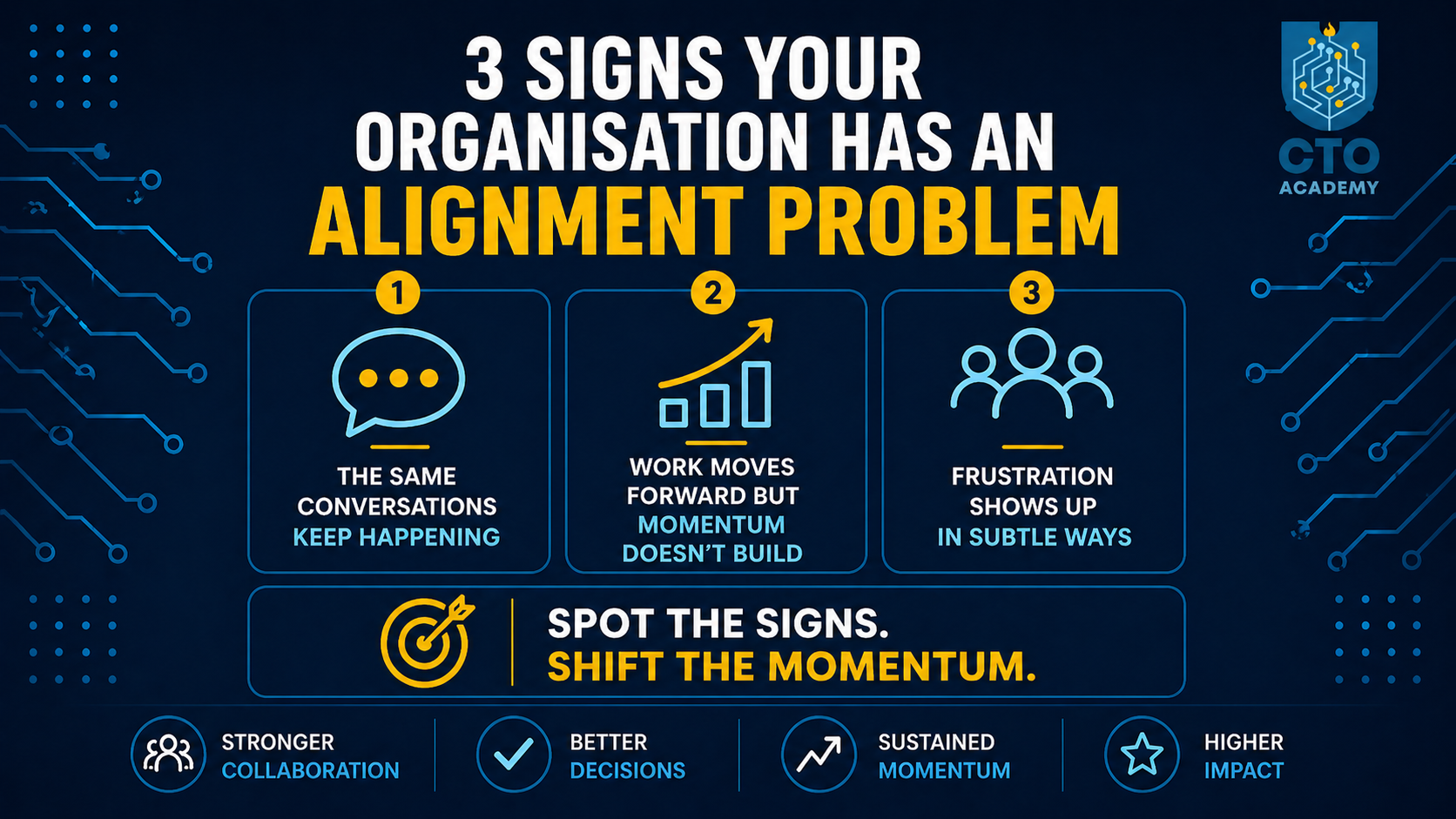
1. The same conversations keep happening
Decisions are made.
Then revisited.
Then reopened again a few weeks later.
Meetings feel repetitive. Alignment feels temporary.
People leave with different interpretations of what was agreed.
Over time, this creates hesitation, which slows everything down.
2. Work moves forward—but momentum doesn’t build
Projects can progress.
Milestones are often hit.
But there’s no real sense of acceleration.
Each phase feels like it’s starting from scratch.
Energy is spent re-explaining, re-aligning, re-prioritising.
Not because people aren’t capable, but because alignment isn’t holding.
3. Frustration shows up in subtle ways
You hear it in tone, not just words.
“It’s more complicated than that.”
“We’ve already tried that.”
“That’s not how it works.”
Different parts of the organisation begin to lose confidence in each other.
Not dramatically.
But enough to create friction.
Individually, none of these is critical.
Together, they create something more serious:
A hidden drag on performance.
What makes this difficult is that it doesn’t clearly sit anywhere.
It’s not obviously a process issue.
It’s not clearly a skills gap.
It’s not something a new system will fix.
But it is something that can be addressed.
Because at its core, this is about how people across the organisation:
- Understand problems
- Make decisions
- Stay aligned over time
And when that improves—
The organisation doesn’t just feel better. It starts moving faster.