Next MBA Cohort Starts Monday, July 6th, 2026

Review Pricing and Join the Cohort

CTO Academy Logo
Log In

Category: CTO Academy

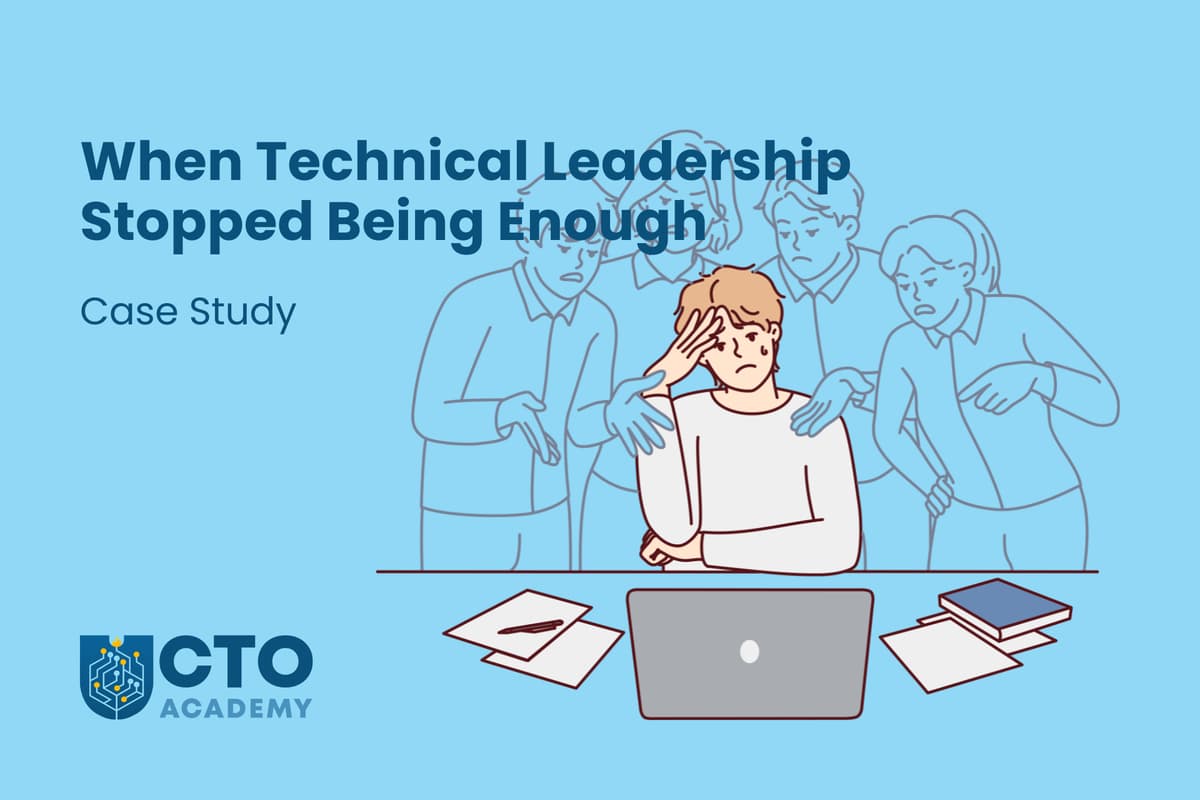
  • When Technical Leadership Stopped Being Enough

    When Technical Leadership Stopped Being Enough

    From the outside, nothing was obviously wrong.

    The title, responsibility, years of experience…everything was there. On paper, this was already a successful technology leader: someone trusted to make decisions, lead teams, solve difficult problems, and carry the weight that comes with seniority. There was no dramatic failure, no public collapse of confidence, no single moment where everything stopped making sense.

    But somewhere along the way, the role had changed.

    Or maybe it is more accurate to say that the role had expanded. What once felt primarily technical had become something broader, heavier, and less easy to define. The conversations were no longer just about architecture, delivery, tooling, or performance. More and more, they were about trade-offs. About influence, business value…priorities that were not purely technical, but still landed in technology leadership’s hands. About speaking to executives, product leaders, boards, peers, and stakeholders who were not interested in the technical elegance of a solution unless it could be translated into impact.

    That was the point at which a quiet discomfort began to set in for many of the graduates of CTO Academy’s Digital MBA for Technology Leaders. Not because they were failing. Quite the opposite. They were already doing the job. But the next level of leadership was beginning to demand something more than technical judgment alone, and they could feel it.

    “It’s rarely about tech.”
    Bianca Glasner, Head of Engineering, Austria

    Again and again, in the graduate reflections, what emerges is not a story of deficiency but a story of range: a growing awareness that technical competence, on its own, was no longer enough for the kind of leader they wanted to become.

    Bianca Glasner, a Head of Engineering and Firmware Lead from Austria, captures that tension in one line that stayed with her: “It’s rarely about tech.” What caught her attention was that the program did not treat technology leadership as pure engineering or as generic leadership training, but as a whole role with many interlocking parts. It reinforces what Manasa Kotha, an Engineering Manager from the US, said, “The program teaches you what leaders are supposed to do in certain situations and how to facilitate or help others in reaching their own potential while you discover yourself.”

    That matters, because by the time someone becomes a CTO, a Head of Engineering, or a senior technology leader on the path toward those roles, the challenge is rarely a lack of knowledge in the narrow sense. More often, it is that the job has outgrown the boundaries of their earlier training. Nobody teaches you, at the start of a technical career, how to think across the full shape of the role later on. Nobody sits you down and explains how to move from being the person with answers in one domain to being the person who has to hold ambiguity across many. Nobody really tells you how much leadership at that level is about reading context, shaping conversations, creating clarity, helping others perform better, and making decisions that are as much human and commercial as they are technical.

    So the tension does not announce itself loudly. It shows up more quietly than that.

    It shows up in meetings where you realize you understand the technical dimension perfectly well, but wish you had a stronger grasp of the business conversation unfolding around it. It shows up in moments when you know what should happen, but feel you could be more effective in how you frame it to executives or non-technical peers. It shows up in the distance between being a strong operational leader and becoming a more complete strategic one. It shows up when the next stage of your career begins to depend less on how well you can solve technical problems yourself and more on how well you can guide a business through them.

    For graduates, that was often the real reason for enrolling. Not to gather another certificate. Not to decorate a CV. And definitely not to pursue ambition for its own sake. They enrolled because something had become impossible to ignore: staying the same, even while remaining competent, no longer felt enough.

    Byron Rode, a CTO from South Africa, describes the effect of the program in a way that reveals the problem it solved. He says he likely would have reached the same endpoint eventually, even without the course, but it would have taken much longer, with more failure and error along the way. The Digital MBA helped him get where he is in his career faster, especially in areas where he had historically struggled: delegation, cross-departmental work, and the crucial skill of speaking non-tech to non-technical people.

    That idea of acceleration is important. It suggests that the program did not give people an entirely new personality or hand them a transformation they had not earned. It did something more credible than that. It shortened the distance between the leader they were becoming and the leader they needed to be.

    The question, then, was why this route, and not another one.

    Because there were other routes. There are always other routes. Traditional MBAs, short leadership courses, scattered books, podcasts, online classes, frameworks picked up over time, advice from peers, trial and error inside the role itself. Senior technology leaders are not short of information. What they are often short of is something else: a learning environment that feels genuinely designed for the complexity of their work.

    That is one of the clearest themes in the graduate reflections. The appeal of CTO Academy was not simply that it offered content. It was that it seemed to understand the reality of the person consuming it.

    “It is crafted for working professionals, blending business with technology.”
    Matthew Miller, IT Manager, Canada

    Matthew Miller, an IT Manager from Canada, points first to the structure of the program: a curriculum crafted for working professionals, blending business with technology, flexible across time zones, and built around community.

    Others talk about lectures that are easily digestible rather than overwhelming, practical modules that reflect real life, and the ability to apply what they are learning directly in their day-to-day roles. Rather than abstract leadership talk, the course seemed to offer something more grounded: insight that could be used immediately, then revisited later as needed.

    That distinction matters more than it first appears to. At this level of leadership, it is not enough for learning to be interesting. It has to be usable. It has to survive contact with a calendar already filled by other people. And more importantly, it has to fit around a job that does not pause politely so personal development can happen in isolation. The graduates frequently mention bite-sized, 100% online lectures that can be taken between meetings or during lunch, not because convenience is the whole story, but because practicality is inseparable from credibility. Senior leaders do not need to be persuaded that learning is good. They need to believe that the learning will fit inside real life rather than asking them to step outside it. Even the humor in Kasey McCurdy’s remark points to that sense of genuine engagement: “I always hated when those pesky meetings got in the way of me joining a CTO Academy expert session.”

    But convenience alone does not create meaning. What gave the experience its weight was what began happening once the course was underway.

    This is where the story becomes more interesting, because the shift described by graduates was not immediate and not theatrical. It did not sound like a single revelation. It sounded like a series of internal adjustments that, over time, became impossible to miss.

    At first, the program seems to have given people language for things they were already doing instinctively, without always knowing how to name them. Kevin Golding, a UK-based Field Technologist, describes that dynamic with unusual clarity, “As a leader,” he says, “You are often doing things without fully knowing that you are doing them, or without understanding why you are doing them at all. The course helped put those actions in perspective: what to do, when to do it, why it matters, and what else should be added to the plan to make leadership more effective.”

    There is a deep relief in that kind of recognition. Not because it flatters the leader, but because it turns instinct into awareness. It takes things that were half-formed and makes them more deliberate.

    Then something broader begins to happen. The role itself starts to look different.

    Leadership stops feeling like a string of urgent reactions and starts coming into focus as a system. Decisions are no longer just about immediate execution but about what kind of organization you are shaping, what kind of conversations you are enabling, what signals you are sending, what habits you are reinforcing, and how technology actually participates in the direction of the business. A module here sharpens one area. Another challenges an assumption. Another expands the frame. Gradually, a fuller picture forms.

    The most interesting part of the graduate reflections is that they do not merely talk about learning topics. They talk about becoming different in how they reason. That is subtler, and more powerful. They describe changes in how they speak to executives, how they work across departments, how they delegate, how they understand their own value, how they approach leadership dilemmas, and how they carry themselves in more senior spaces. This is not the language of “I picked up a few useful tools.” It is the language of identity slowly reorganizing itself around a larger role.

    “The course helped me recognize further value in what I do and what I bring to the table.”
    Stephen Morris, Fractional CTO, UK

    Stephen Morris, a Fractional CTO based in the UK, puts it beautifully. The course, he says, helped him recognize further value in what he brings to the table, while also allowing him to identify his weak areas. More than that, it gave him the perspective of a whole role that nobody had told him about at the beginning. That matters because once you understand the whole shape of a role, you stop feeling like you have wandered into spaces you do not belong in. You start to feel, in his words, more confident as a board member or aspiring board member, because now you know the answers. And even if you knew them before, you are more able to recognize your own value and be trusted in that recognition.

    That is not a small change. It is one of the hardest things to acquire in leadership: not just skill, but self-possession. Not just the ability to do the work, but the internal authority to stand in rooms that once felt slightly beyond reach and know that you belong there.

    Kasey McCurdy, Head of Engineering in the US, describes another side of that development. The course changed the way he spoke to product teams and to the executives he reported to. It helped him take on more of the executive functions and really own them.

    That phrase is worth lingering on: really own them. Not imitate them, not observe them from the outside, not perform them uncertainly, but own them. Because there is a difference between being adjacent to executive responsibility and feeling capable of inhabiting it fully.

    This is the real middle of the story. Not the modules themselves, but the accumulation of internal upgrades they triggered.

    A broader lens.
    A clearer vocabulary.
    Better judgment.
    More confidence in ambiguity.
    A stronger ability to translate.
    A more natural executive posture.
    A less fragmented understanding of what the role asks of you.

    And all of this happened while the leaders were still inside their jobs, still facing their normal pressures, still carrying the same responsibilities. Which may be why the learning seems to have landed so deeply. It was not taking place in an abstract future. It was colliding, week by week, with the real situations these people already had to navigate.

    Running alongside this intellectual and professional change was something else that graduates repeatedly return to: community.

    “It’s more than just a great course. It’s also about being a part of a network.”
    Byron Rode, CTO, South Africa

    This might sound secondary from the outside, but in the graduate reflections, it clearly is not. Again and again, what emerges is how isolating senior leadership can feel, and how meaningful it is to find a network that understands the role from the inside.

    Byron Rode says that, as a CTO, you rely on a network or community, especially if you are outside your usual realm, as in the case of an accidental CTO. Stephen Morris describes the community as a different type of support network: a place where you can reach out with specific technical questions or with leadership challenges, and where the people around you understand the peculiar difficulties of what you do. Matt Miller emphasizes that the curriculum itself is built around and for the community. And Kasey McCurdy perhaps captures the emotional truth of it most directly: when he faces a dilemma, he knows there are others in the world dealing with the same thing, and many of them are part of this community — some going through it now, others already through to the other side and eager to help.

    That completely changes the feel of the experience. It means the leader is not just studying alone. They are being accompanied. Their questions are not signs of weakness but part of a shared professional reality. Their dilemmas are not private failures but familiar patterns others can recognize and help untangle — whether that is working through a board-level disagreement, or finding a way to move a legacy team past resistance to change. For people in senior roles, that kind of support is not ornamental. It is often the difference between learning something intellectually and having the confidence to live it out.

    By the end of the experience, the outcomes graduates describe are striking precisely because they are not exaggerated.

    They do not read like miracle stories. They read like something more convincing: a noticeable shift in pace, confidence, and scope.

    For some, the main difference was speed. They arrived at stronger decisions faster, with less wasted motion. For others, the biggest change was language — being able to speak more effectively to product leaders, executives, boards, and non-technical stakeholders. For others still, the shift was more personal: recognizing their value more clearly, understanding where they were weak without shame, and feeling more grounded in the full role they were stepping into.

    Across the reflections, the pattern is consistent. These leaders did not emerge as entirely different people. They emerged as more complete versions of themselves: faster where they had been hesitant, broader where they had been narrowed, more confident where they had once felt slightly unsteady, more able to translate, align, influence, and lead across the business rather than only within technology.

    That is why this story lands where it does.

    Not in the territory of obvious reinvention, and not in the flat language of professional development. It lands somewhere truer than that. In the recognition that there comes a point in a leadership career when experience alone is no longer enough to unlock the next stage. When what is needed is not more hustle, not more technical depth, not another handful of fragmented ideas, but a more coherent way of seeing the role. A more integrated kind of growth. A structure for becoming the leader the job has already started asking you to be.

    For the graduates, that appears to be what the program provided. Not an escape from the work, but a better way to meet it. Not a dramatic identity transplant, but a steady strengthening of judgment, confidence, and range. Not a promise that everything would change overnight, but something perhaps more valuable than that: the feeling that they were no longer trying to grow into the next version of themselves by instinct alone.

    And perhaps that is the most persuasive thing in all of this. These were not people looking to become someone else. They were already accomplished. Already trusted. Already carrying real weight.

    They simply reached the point where technical leadership, on its own, was no longer enough.

    And they decided to grow into the full shape of the role.

    Hear the stories in their own words.
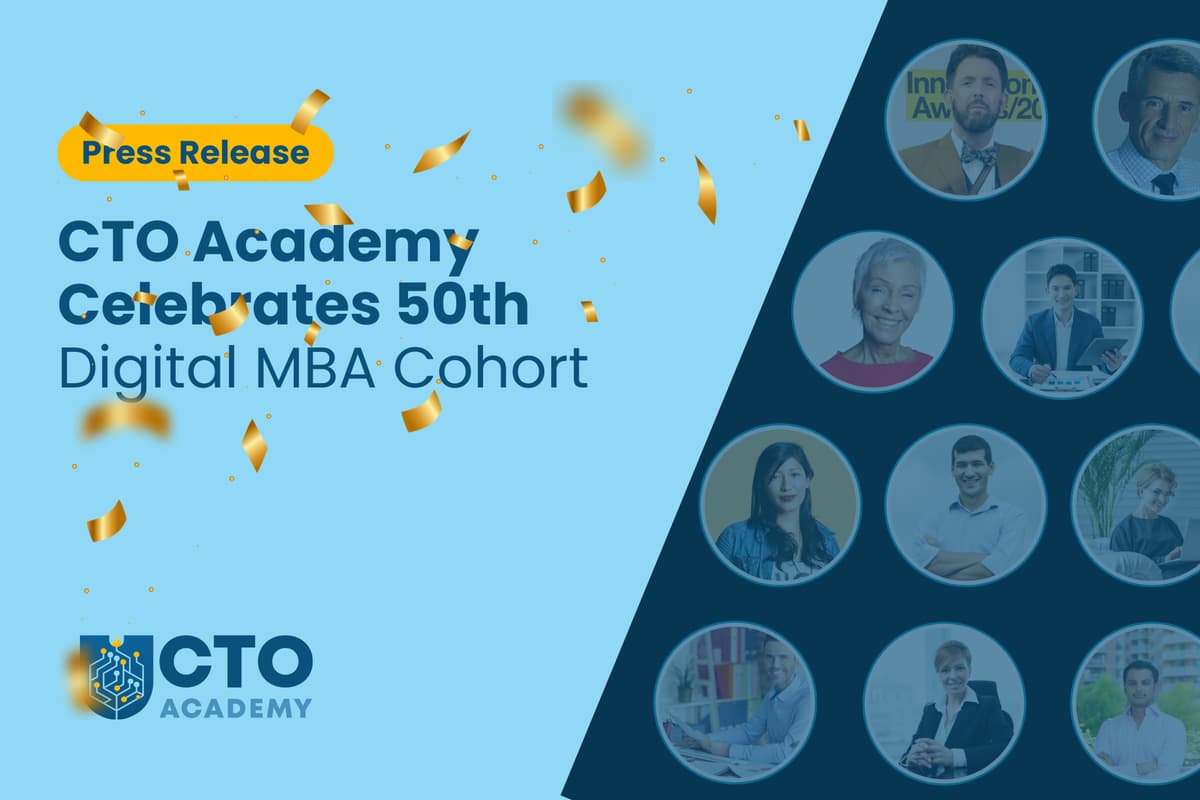
  • PR: CTO Academy Celebrates 50th Digital MBA Cohort

    PR: CTO Academy Celebrates 50th Digital MBA Cohort

    London, UK – March 30, 2026 – CTO Academy is celebrating a special milestone on April 7 as it launches the 50th cohort of their globally recognized leadership program, The Digital MBA for Technology Leaders. It is a milestone achievement that reflects not just the organization’s growing stature but also celebrates a global community united by a shared mission: building better leaders for the technology industry.

    Since launching in January 2022, the Digital MBA has attracted >1,000 technology leaders from 85 countries, creating a vibrant international network of graduates who’ve helped redefine what great tech leadership looks like.

    With near‑perfect reviews, it competes directly with the more traditional and rather more expensive CTO programs at institutions like Wharton, Berkeley, MIT, and Cambridge.

    At its core, the Digital MBA helps technologists step beyond their technical expertise to master the strategic, commercial, and human dimensions of leadership. The program blends MBA‑level learning with the realities of leading teams, managing change, and influencing at the board level — all delivered in a flexible, cohort‑based format that fits busy senior professionals.

    Reflecting on the milestone, Andrew Weaver, CEO and Co‑Founder of CTO Academy, said:

    “When we launched in 2022, we wanted something accessible, practical, and community-led — a program that could meet tech leaders where they are and help them reach where they wanted to go. To now see 50 cohorts, many hundreds of graduates, and the community that’s grown around them is both humbling and deeply rewarding.”

    The results speak for themselves.

    Alumni consistently describe the experience as “transformative — it changed how I lead, not just what I know,” while others call it “hands‑on, inspiring, and truly relevant to modern tech leadership.” One recent graduate summed it up simply: “The best investment I’ve made in my professional growth.”

    What sets the Digital MBA apart isn’t only the content but the spirit and sense of support that CTO Academy and its network have created so that it’s also a dynamic ecosystem of mentors, collaborators, and friends with many graduates getting directly involved — recording new lectures, hosting live sessions, and launching initiatives often seeded during the course itself.

    “Our participants tell us the real magic happens in the conversations — the moments of reflection, challenge, and support that happen between peers who truly understand the journey,” added Weaver. “That spirit of connection has carried us through 50 cohorts and will continue to shape the next 50 and the wider connections we’re making as we broaden CTO Academy into new markets and new challenges.”

    As CTO Academy looks ahead, new programs, live events, and corporate learning partnerships are on the horizon, helping technology and non-technology leaders alike to sharpen their leadership skills for the challenges ahead. 

    For more information, visit 

    cto.academy/the-digital-mba-for-technology-leaders

     or explore reviews at 

    trustpilot.com/review/cto.academy

  • Tech Leadership In So Many Words…#32: Analytical

    Tech Leadership In So Many Words…#32: Analytical

    Being “Analytical” in tech leadership means harnessing both critical thinking and mixed research methods to make informed decisions. Analytical leaders delve deeply into data, using a blend of quantitative and qualitative analysis to gain comprehensive insights.

    This dual approach allows them to not only interpret vast arrays of numerical data but also understand the subtleties of user behaviour and market dynamics that numbers alone cannot reveal. For example, when evaluating a new market opportunity, an analytical leader might combine statistical analysis of market data with qualitative feedback from focus groups or expert interviews.

    This integrated approach helps them grasp not only the size of the opportunity but also the nuanced needs of consumers and the competitive landscape, leading to more strategic and effective decision-making.

    Furthermore, analytical leaders apply critical thinking to:

    • Challenge assumptions
    • Test hypotheses, and
    • Consider multiple perspectives before making decisions.

    They foster a culture where data-driven insights and rigorous evaluation of information are paramount. This ensures that strategies are not just based on data but are also critically assessed, allowing for adjustments and refinements that align with both the current market conditions and future trends.

    Such a leadership style is invaluable in tech, where innovation is rapid and the ability to adapt based on a thorough analysis can provide significant competitive advantages.

    Analytical leaders empower their organisations to not only collect data but to synthesise and act upon it effectively, ensuring that decisions are both informed and impactful.

    Not everything that can be counted counts, and not everything that counts can be counted.

    Albert Einstein
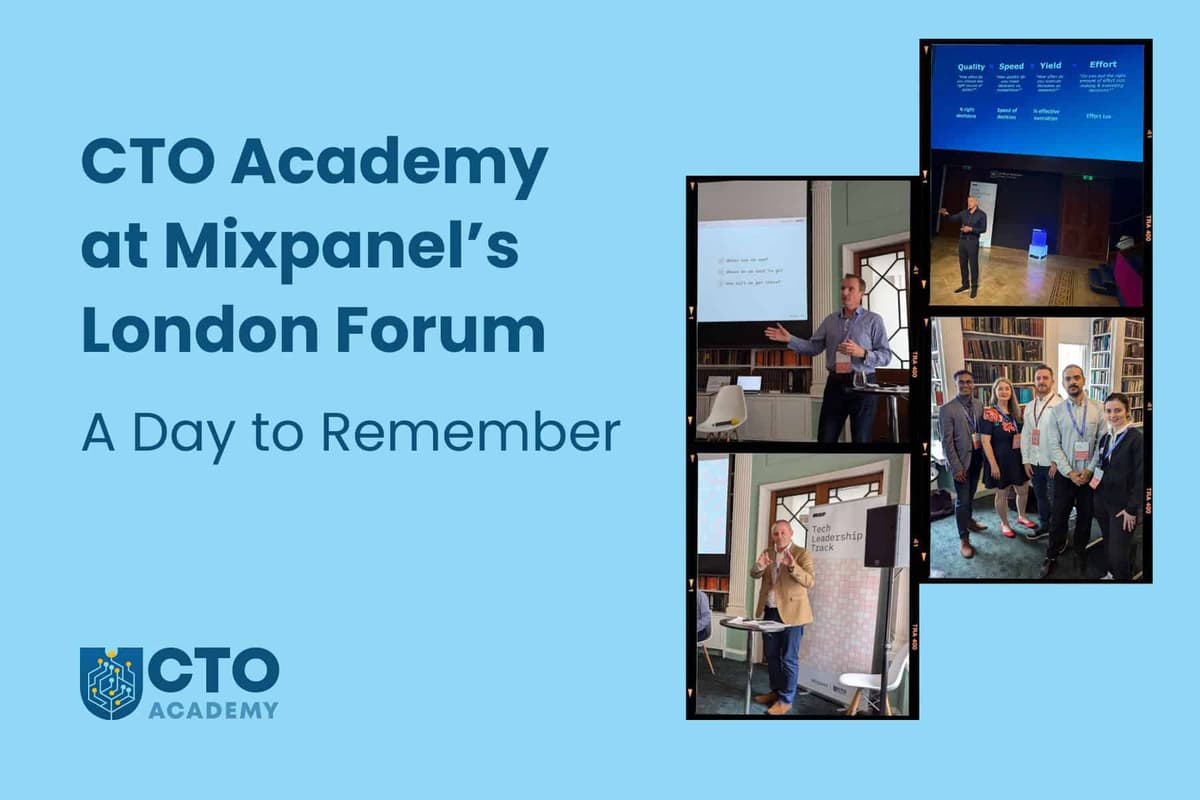
  • CTO Academy at Mixpanel’s London Forum: A Day to Remember

    CTO Academy at Mixpanel’s London Forum: A Day to Remember

    Anyone who’s ever helped pull together even the smallest event knows the feeling: the last-minute nerves, the scramble to check if the location works, and the persistent fear that something—anything—might go off track. Will people turn up? Will the tech work? Will the presenter (gulp) remember their slides?

    Which is why we want to raise a glass—and a blog post—to the fantastic team at Mixpanel for absolutely smashing it with their 4th annual customer forum in London.

    Held at the historic and stunning Royal Institution, this year’s edition was the biggest yet, welcoming over 250 people through the doors. But this wasn’t your typical “a couple of chairs and a panel about AI” kind of day. Far from it.

    Mixpanel delivered a fully-fledged, multi-track, all-day experience with:

    • 3 inspiring keynote talks
    • 3 leadership tracks spanning Data, Product, and Tech
    • A dedicated Mixpanel Masters series for the deeply curious and committed

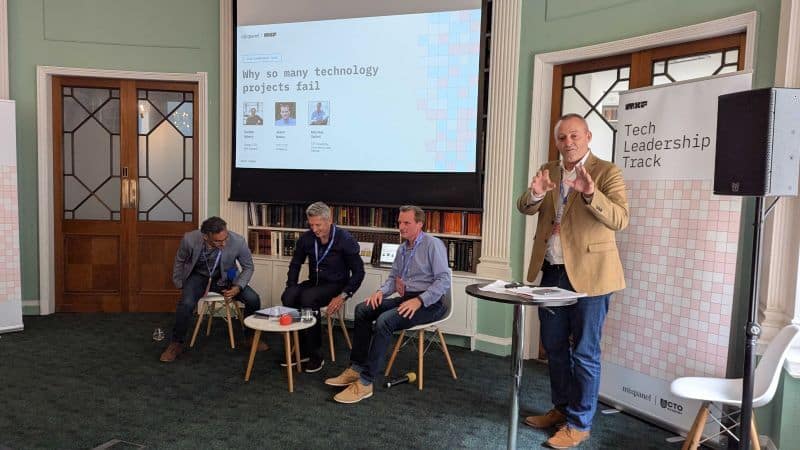
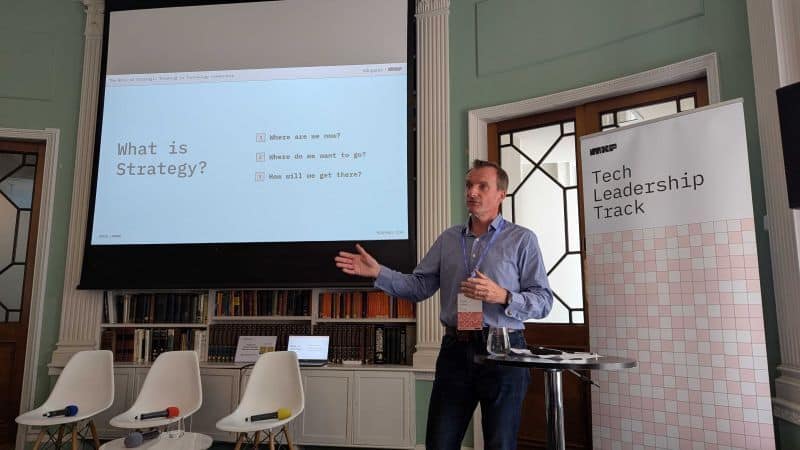
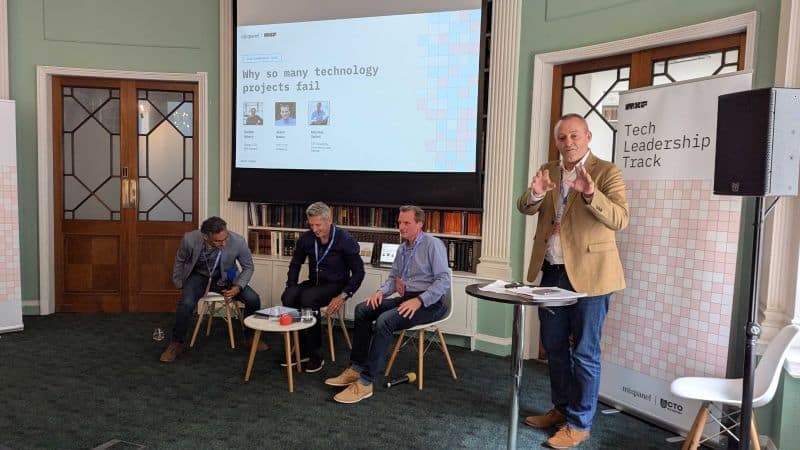
    We at CTO Academy were thrilled to host the Tech Leadership Track—and even more thrilled to do so in one of the venue’s magnificent libraries. Just reading the book spines between sessions gave us goosebumps.

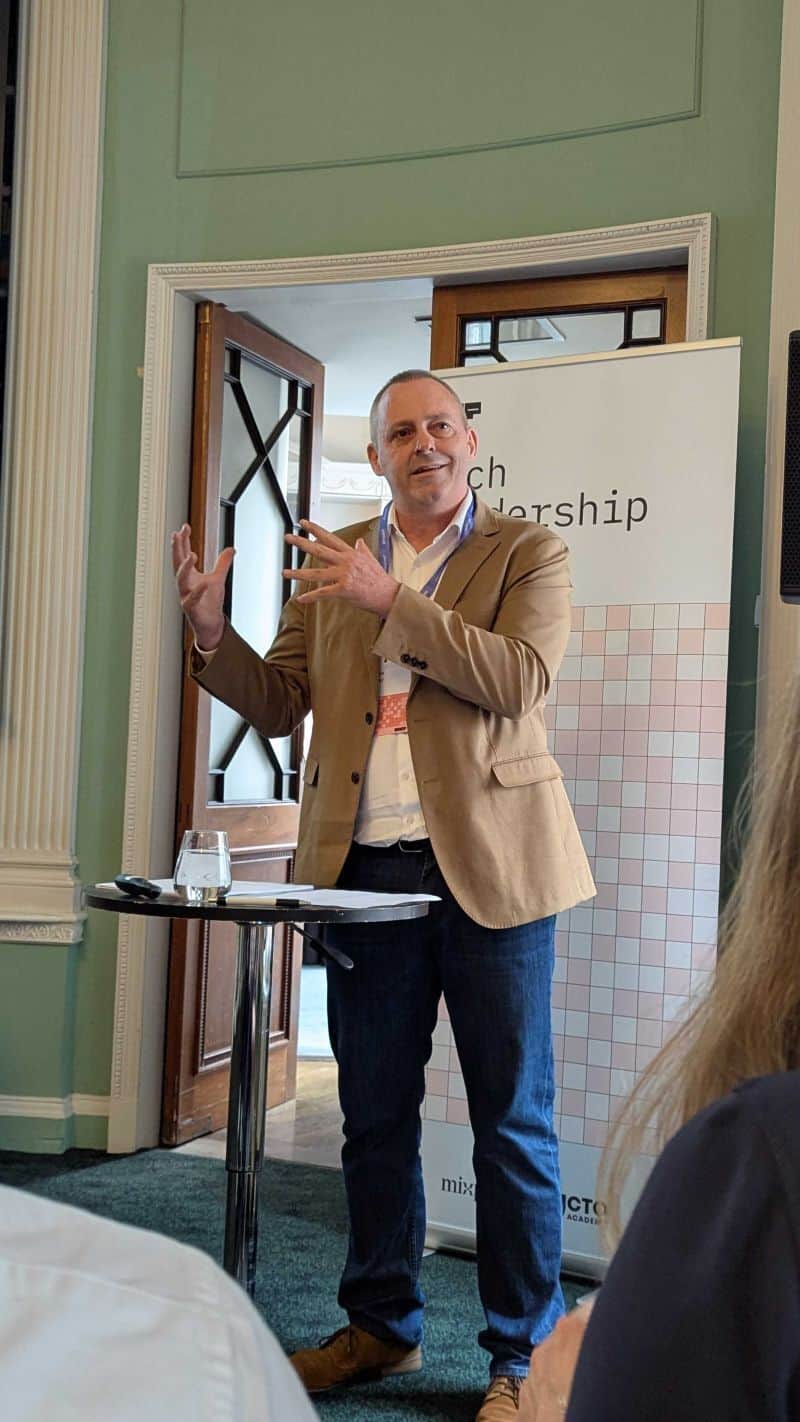
    CTO Academy co-founder and CEO, Andrew Weaver, delivering his keynote at Mixpanel 2025 London Event
    CTO Academy co-founder and CEO, Andrew Weaver, delivering his keynote

    Hats off to the incredible Mixpanel team—especially Amy Hsuan, Larissa McIntyre, Wissam Lebsir, and Anna Crisp—for their tireless work and support. A special shoutout to Ashley Beauchamp for championing our track and her much-loved “Woop-Woop” after our session.

    Thank you also to Natalie Kouzeleas for getting us involved from the start.

    The keynote speakers were top-notch:

    • Paolo Sabatinelli (CPO, Intermobbilia)
    • Edward Hsu (Mixpanel)
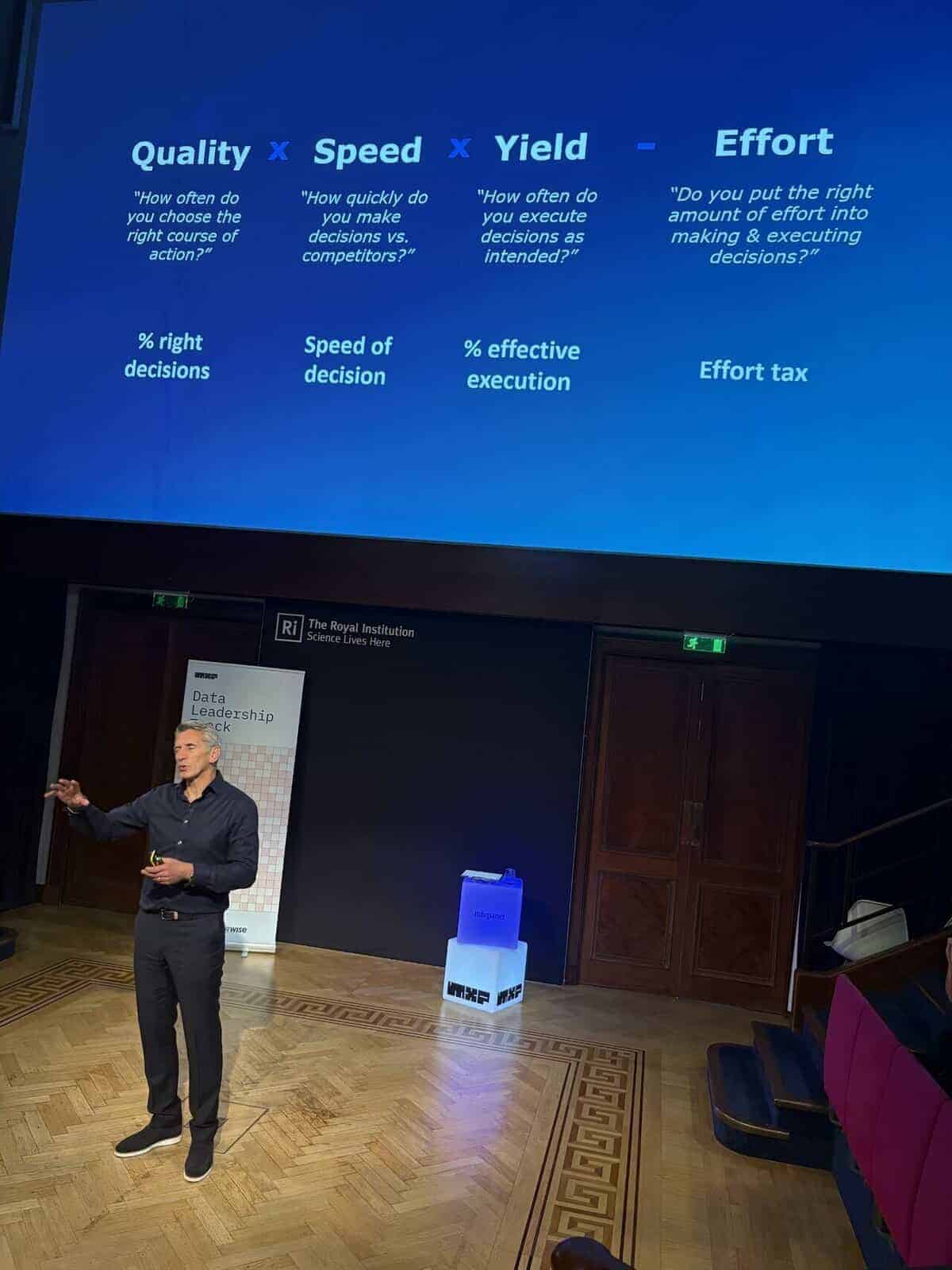
    • And our very own friend Michael Spiteri (Gartner), who delivered a powerful talk on decision-making, right where Michael Faraday once introduced the world to electromagnetism. Talk about standing on the shoulders of giants!

    Big thanks to the CTO Academy crew and our guest speakersJason Noble, Sanjay Mistry, Corey Latislaw, David Kavanagh, Maria Laura Scuri, Wayde Herman, and, again, Michael Spiteri. And a special nod to Umbar Shakir, who literally stepped off a transatlantic flight to support our track!

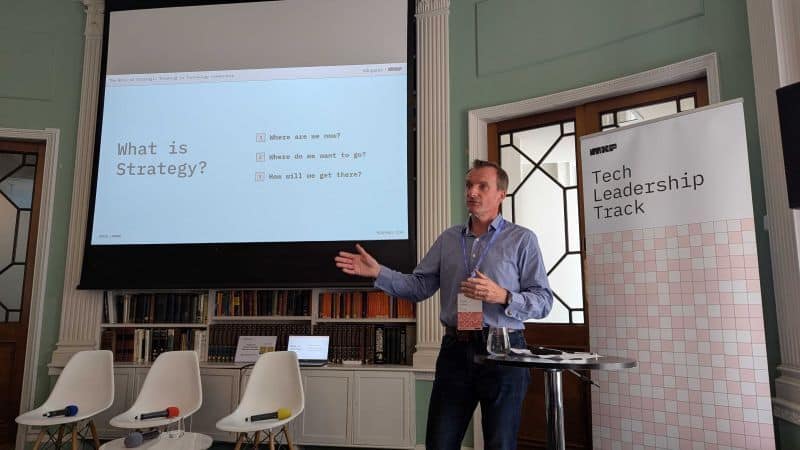
    CTO Academy co-founder and CTO, Jason Noble, delivering on strategy (Mixpanel 2025 London event)
    CTO Academy co-founder and CTO, Jason Noble, delivering on strategy

    To those who joined our sessions: thank you. We feared we might be the “New Music Tent” of the day (brave but empty), but your attendance—and especially those of you who joined all four talks (we see you, Ken Deegan and Duncan Cowan)—was fantastic.

    Finally, to everyone who attended the day overall: thank you for helping make it such a vibrant, energising, and memorable occasion. We had a blast, and we hope you did too.

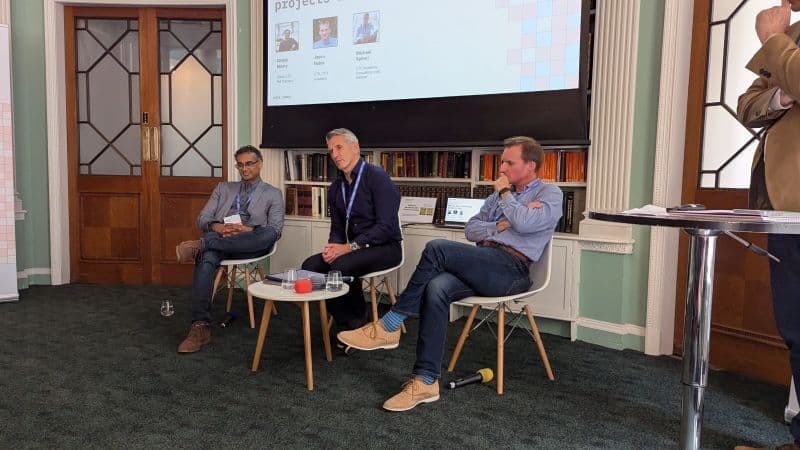
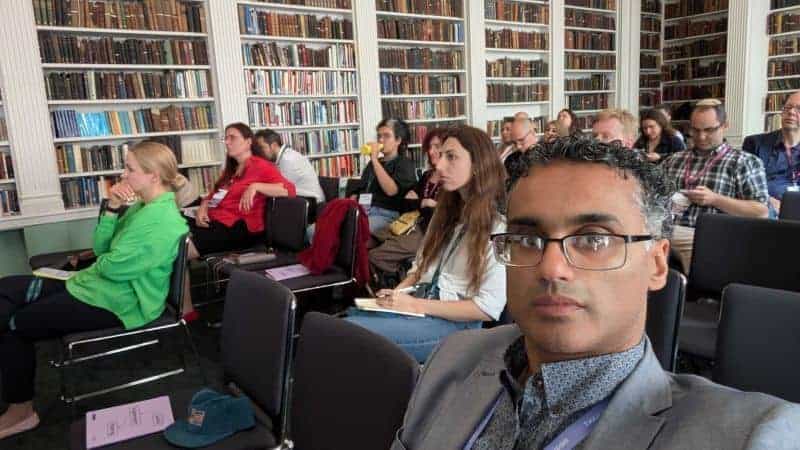
    Here are a few more photos from the event, just so you can visualize the atmosphere:

  • Tech Leadership In So Many Words…#31: Innovative

    Tech Leadership In So Many Words…#31: Innovative

    Innovation in the tech industry extends far beyond the creation of new gadgets and software; it encompasses novel approaches to operations, strategy, and organisational structure. True innovation involves rethinking how things are done, aiming for efficiency and effectiveness in achieving or creating outcomes.

    For example, the shift from traditional agile methods to more holistic approaches, like those discussed in “Team Topologies,” illustrates innovation in workflow organisation. This model focuses on streamlining communication and collaboration within development teams to enhance productivity and software delivery.

    An insight from the late Steve Jobs, “Innovation distinguishes between a leader and a follower,” captures the essence of this broader view of innovation. It’s not just about new products but about pioneering new ways to approach business challenges and market needs.

    Innovative leaders drive their companies to adopt such forward-thinking strategies, fundamentally altering the competitive landscape and setting new standards for their industries.

    Innovative leadership means cultivating an environment where every operational process is questioned, and improvements are continually sought.

    Leaders like this inspire their teams to think beyond conventional boundaries, whether in developing new technologies or in devising better ways to work together. In other words, they understand that innovation is about effective execution as much as it is about brilliant ideas, transforming their products and processes to achieve remarkable results.

  • Tech Leadership in So Many Words…#30 – Decisive

    Tech Leadership in So Many Words…#30 – Decisive

    In the fluid and constantly changing world of tech, decisiveness is crucial, particularly in agile teams that often operate with a flat hierarchy and are expected to be autonomous. However, this structure can sometimes lead to a scenario where “too many chefs and not enough cooks” impede swift decision-making.

    Being “Decisive” means cutting through the potential gridlock of collaborative environments to make timely, effective decisions based on data and the opinion of a variety of team members.

    For example, in many tech companies, while the agile methodology promotes team autonomy, it can also lead to delays if not managed with decisive leadership.

    A decisive leader in this context would ensure that while collaborative input is essential, there are clear protocols and appointed decision-makers at critical junctures to prevent stagnation and ensure that decisions are made efficiently and effectively. These decisions should ideally avoid “trap-door” decisions, where the stakes are high and the path back is not feasible. Leaders need to approach such irreversible decisions with great care and strategic foresight.

    Theodore Roosevelt’s insight reflects the essence of such leadership: “In any moment of decision, the best thing you can do is the right thing, the next best thing is the wrong thing, and the worst thing you can do is nothing.” This highlights the importance of decisiveness, suggesting that the risk of making a wrong decision is often more favourable than the cost of inaction.

    Decisive leaders establish frameworks where decisions are data-informed yet swift, enabling their teams to respond quickly to changing market demands and technological advances. This not only accelerates innovation but also instills a culture of trust and accountability, essential in maintaining the momentum in fast-paced tech environments.

  • CTO Academy Secures New Round of Funding to Accelerate Global Expansion

    CTO Academy Secures New Round of Funding to Accelerate Global Expansion

    London, UK – April 8, 2025 – CTO Academy, a globally recognized provider of leadership training for technology leaders, announced the successful completion of its latest funding round with support from Jenson Ventures.

    This investment marks a significant milestone in CTO Academy’s journey as the company scales to the next level and solidifies its position as one of the leading brands in technology leadership training worldwide.

    Since its launch in 2019, CTO Academy has worked with tech leaders in over 100 countries, delivering cutting-edge leadership training programs tailored to the unique challenges faced by technology executives.

    Its flagship course, The Digital MBA for Technology Leaders, often described as “a game changer for technology leaders,” helps professionals bridge the gap between technical expertise and executive leadership.

    Andrew Weaver, CEO of CTO Academy, expressed his gratitude for the continued partnership with Jenson Solutions: “Jenson has supported CTO Academy from the day we opened our virtual doors, and so we’re delighted to confirm the news of this latest investment that will help to support our ambitious growth plans. Thanks to Jeffrey and the team for all the work they do with early-stage and fast-growth companies—it’s so important and much appreciated.”

    Jeffrey Faustin, CIO of Jenson Ventures commented, “We’re proud to continue backing CTO Academy as they enter this exciting phase of growth. From day one, Andrew and the team have shown a clear vision and deep understanding of the evolving demands of technology leaders. Their ability to scale globally while maintaining quality and impact is impressive, and we’re confident this latest round of funding will help accelerate their mission to shape the next generation of tech executives.”

    With additional funding in place, CTO Academy is now poised to expand its global footprint and continue empowering technology leaders around the world with the skills they need to thrive in executive roles.

    About CTO Academy

    CTO Academy is a global leadership development platform designed specifically for technology leaders. With a mission to close the gap between technical expertise and strategic leadership, CTO Academy provides online courses, mentoring, and coaching for CTOs, senior engineers, and aspiring tech leaders.

    The platform offers a structured curriculum and access to seasoned CTO mentors, helping members build the commercial, operational, and leadership skills required to thrive in senior technology roles. Trusted by professionals in over 100 countries, CTO Academy is redefining how tech leaders grow, lead, and deliver impact in their organizations.

    About Jenson Ventures

    Jenson Ventures is a UK-based investment firm dedicated to supporting early-stage, high-growth companies across various sectors. Established with a mission to bridge the funding gap for start-ups post-seed and pre-Series A, Jenson Ventures offers a combination of strategic capital and hands-on support.

    Leveraging extensive experience in entrepreneurship, finance, and venture capital, the firm has backed over 100 companies through its SEIS and EIS funds. Jenson Ventures is committed to fostering innovation, empowering ambitious founders, and driving sustainable growth in the dynamic start-up ecosystem.

  • Tech Leadership in So Many Words…#29: Adaptive

    Tech Leadership in So Many Words…#29: Adaptive

    Adaptability in tech leadership is the ability to change one’s approach and strategy to meet new challenges and environments effectively. It is a trait that allows leaders not just to respond to changes but to thrive amid them.

    Bruce Lee’s famous philosophy, “Be like water“, perfectly encapsulates this idea. Water is flexible; it flows into any shape and can either gently fill gaps or crash with mighty force. Similarly, adaptive leaders can navigate the complexities of the tech industry, adjusting their strategies and methodologies as needed without losing momentum or focus.

    This adaptability is crucial for technology innovation. The tech landscape is constantly evolving with new challenges emerging at a rapid pace. Leaders who embrace a flexible mindset can foresee potential changes and pivot their operations or product development processes accordingly. They foster environments where teams are encouraged to experiment and learn from each outcome, whether it’s a success or a setback.

    Incorporating adaptability into leadership involves continuous learning and an openness to feedback. It means staying updated with the latest technological advancements and industry trends, and being ready to overhaul outdated practices that no longer serve the evolving market demands. Thus, being like water isn’t just about being flexible—it’s about being powerfully responsive and resilient in the face of change.

  • Press Release: CTO Academy Launches Masterclass Series for Technology and Business Leaders

    Press Release: CTO Academy Launches Masterclass Series for Technology and Business Leaders

    [London, January 2025] – CTO Academy, a global leader in executive leadership training for senior technology professionals, is excited to announce the launch of its Masterclass Series—an exclusive set of deep-dive sessions designed to explore cutting-edge topics at the intersection of technology and business strategy.

    Since its launch in 2019, CTO Academy has empowered thousands of technology leaders across 101 countries to help them elevate their leadership and soft skills through its flagship program, The Digital MBA for Technology Leaders. This comprehensive executive leadership course competes directly with esteemed CTO programs at the likes of Wharton, Berkeley, MIT, and Cambridge Judge.

    The company also offers the Future Leaders Course, targeting aspiring managers, and the CTO Academy Membership, featuring weekly live sessions alongside a global community of 1,000+ senior technology leaders.

    The new Masterclass Series builds on CTO Academy’s reputation for delivering actionable insights. These half-day sessions led by subject-matter experts will provide a high-impact exploration of critical topics for modern leaders—not just the CTO but of relevance to CEOs and other C-suite executives.

    The first two Masterclasses include:

    “These Masterclasses are designed for leaders who want to stay ahead of the curve on critical technology and business trends,” says Andrew Weaver, CEO at CTO Academy. “They’re an essential resource for CTOs and CEOs who want actionable strategies for driving innovation and growth.”

    For more information and to secure your place, visit the CTO Academy Masterclass Series

    ABOUT CTO ACADEMY

    CTO Academy empowers existing and aspiring technology leaders with the skills and knowledge needed to navigate the complexities of leadership roles. Our executive education programs and global community of senior technology leaders, are built upon a learning ecosystem around the personal and professional growth of ambitious technologists.

    Find out more at CTO Academy

  • That Was The Year That Was

    That Was The Year That Was

    My 2024 started with a bold New Year resolutions list that whilst well-intentioned, has delivered mixed results …

    Table A: Review of Weaver’s New Year Resolutions from the 1st of January 2024

    Column AColumn BColumn C
    “Failed Miserably”“Some Improvement”“Smashed It”
    Lose 10 kgsImprove my SpanishFix the draw I broke in 2018
    Avoid the cookie jarStretch every most daysLaunch a new board game
    Stop taking phone to bedReduce “you’re on mute” momentsHelp CTO Academy reach new heights

    So I hereby promise to crack Column A

    try harder with Column B,

    but take this opportunity to celebrate enthusiastically the achievements of Column C,

    in particular the achievements of Column CTO Academy.

    A Year in the Life of CTO Academy

    Now I probably need to manage your expectations about the “heights” we achieved during 2024.

    Are we en route to Unicorn status?

    No.

    Did we achieve endless column inches in Tech Crunch?

    No.

    Am I about to gain entry onto the Forbes “40 under 40” list?

    No, but that’s an ageist thing.

    Instead, I’m able to report on the slow, steady yet unrelentingly upward trajectory of a project that I’m proud to lead as CEO and which is only going to get better and stronger as we move into 2025.

    Now I’ll be open with you that sometimes during the year, as an entrepreneurial CEO with a great future behind him, the pace of development has at times felt glacial but with experience comes an understanding that sustainable growth for most, is more incremental progress than VC-backed rocket fuel.

    With the majority of start-ups failing to make a profit, and many not reaching a 1st-anniversary party, we’ve always taken the approach of “move slow and build things”.

    But it’s sometimes only when I step back and reflect – albeit a step back forced on me by a marketing team looking for some fresh copy – that I fully appreciate the progress we’ve achieved, the connections we’ve made and the impact we’ve had.

    The great news is we’ve only just started.

    We’ve only scratched the surface of what we want to achieve, who we want to impact and where we want to go as we scale CTO Academy.

    But before I get too carried away with the future, here are some headline numbers achieved during the past 12 months:

    101 countries now have CTO Academy customers

    78 online sessions hosted during 2024 with 2500 attendees

    100 Trustpilot reviews now posted, 98 of them at 5 stars

    1 nomination for the “Best Online Distance Learning” award

    15 in-person events across Europe, Middle East and USA

    500+ tech leaders graduated from our leadership courses

    30,000 individual lecture ratings posted at an average of 4.7 out of 5

    46% year-on-year growth in revenue

    And it’s not just these raw numbers that indicate we’re doing something right, other more subtle indicators lead me to the conclusion that our direction of travel is a positive one: 

    • Organic leads have sprinted past the paid ones 
    • WOM recommendations are no longer an aspiration
    • We work on rather than just in the business
    • I can switch my phone off when on holiday
    • I’m no longer cynical about award nominations
    • Our market instinct is sharp enough to weed out time wasters
    • Friends have stopped suggesting alternative career options
    • Customers complain because they really care
    • Corporate finance firms have started reaching out

    It’s Rarely About The Tech

    We have a mantra in our leadership courses – indeed a Week 1 lecture on The Digital MBA for Technology Leaders covers this topic in detail – that success in senior leadership roles is rarely about the tech; it’s almost always about the soft skills.

    No matter how digital we get.

    No matter how much we might feel (and like) to hide behind the tech.

    Success almost always comes down to people.

    People are what make every company successful.

    So my final thoughts on a fantastic year go to…

    Our Team

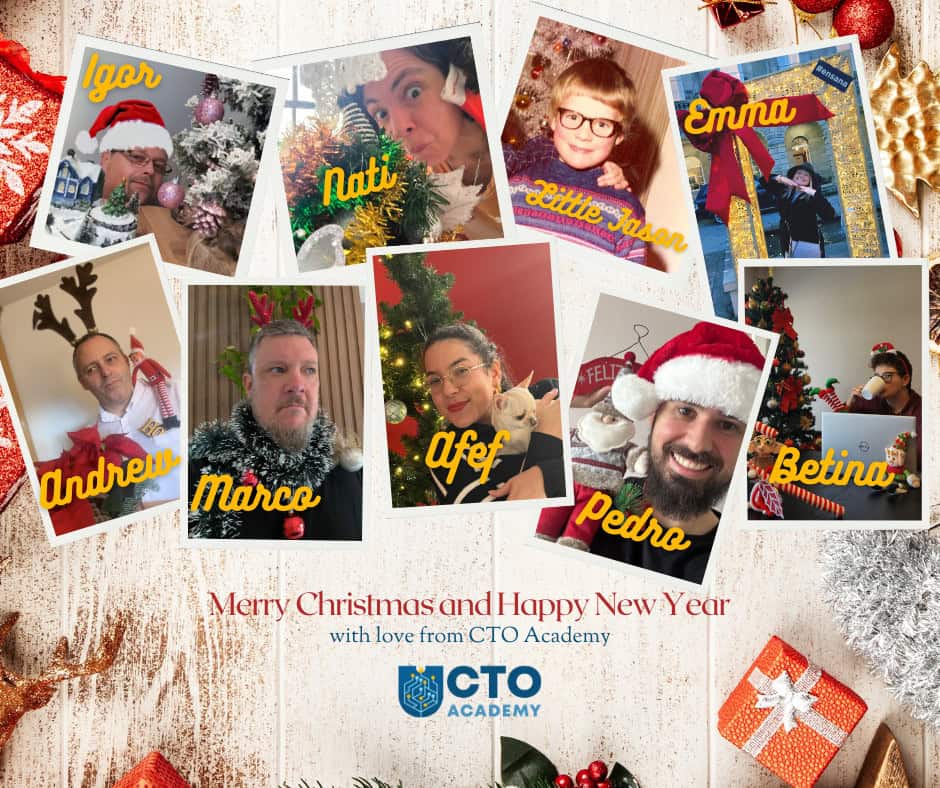
    CTO Academy Team Christmas and New Year Card

    Definition of “remote” (adjective)

    1. conducted or working away from a usual workplace or location, making use of communications technology:
    2. aloof and unfriendly in manner.

    In those pre-zoom, pre-covid, pre-hybrid vs office vs remote debate days, when we used to meet by a literal water cooler, mentioning that a team member was “remote” suggested they were aloof and unfriendly in manner (ie. not a team player).

    Today, “remote” tends to mean a whole different thing and yet our fully remote team couldn’t be any less “remote” if you’re keeping up with the double use of the word.

    They are a warm, committed, loyal group of people that it’s been a privilege to work with on the journey so far and as we grow the team through 2025 a key challenge for senior management will be to ensure that we maintain the same channels of communication, standards of transparency and individual considerations that enable everyone to continue growing alongside the company.

    Lose that and we lose the intangible glue that has enabled us to get this far.

    Our Community

    Likewise, I feel privileged to be working with and alongside a customer base like few others, with a community that contains some of the most talented and motivated people I’ve ever met.

    Every time I host a 1:1 call or live session and start to glance down through the LinkedIn profiles of those attending, I quake at my relative level of underachievement.

    It’s a wonderful motivation for me and the team to be helping such a talented group of people from all over the world to achieve their optimal career impact.

    I salute every single CTO Academy customer because your motivation to learn and to share your knowledge is inspiring and gives us enormous energy to deliver an ever-improving customer experience across every touchpoint of our growing organisation.

    Our Guests

    As the saying goes, “You can tell a lot about someone by the company they keep”, and we’ve been swept away by the quality of expert guests prepared to come and deliver their insight under the Q&A glare of our senior tech leaders.

    From the DevOps guru to the Meditation expert to a lot of people who know a lot of stuff about a lot of things, we’ve hosted 40+ guests across our various live sessions and it’s been rare indeed when they’ve failed to hit the bullseye with some of their insight.

    Thank you to all of our guests who’ve helped to enrich our debates.

    What’s Ahead for CTO Academy?

    Who knows where 2025 might lead us all – we hope towards a more peaceful coexistence around the world.

    For the team here at CTO Academy we plan to start the new year with a bang:

    • Launch our new Masterclass Series
    • Re-launch a completely transformed Future Leaders Course
      Add improvements and iterations to The Digital MBA for Technology Leaders
    • Announce a major new sponsor
    • Deliver an expanded global partner and events programme
    • Introduce talented new members to the team
    • Support our fabulous global community of seriously talented tech leaders

    …and let’s see where the journey takes us next.